
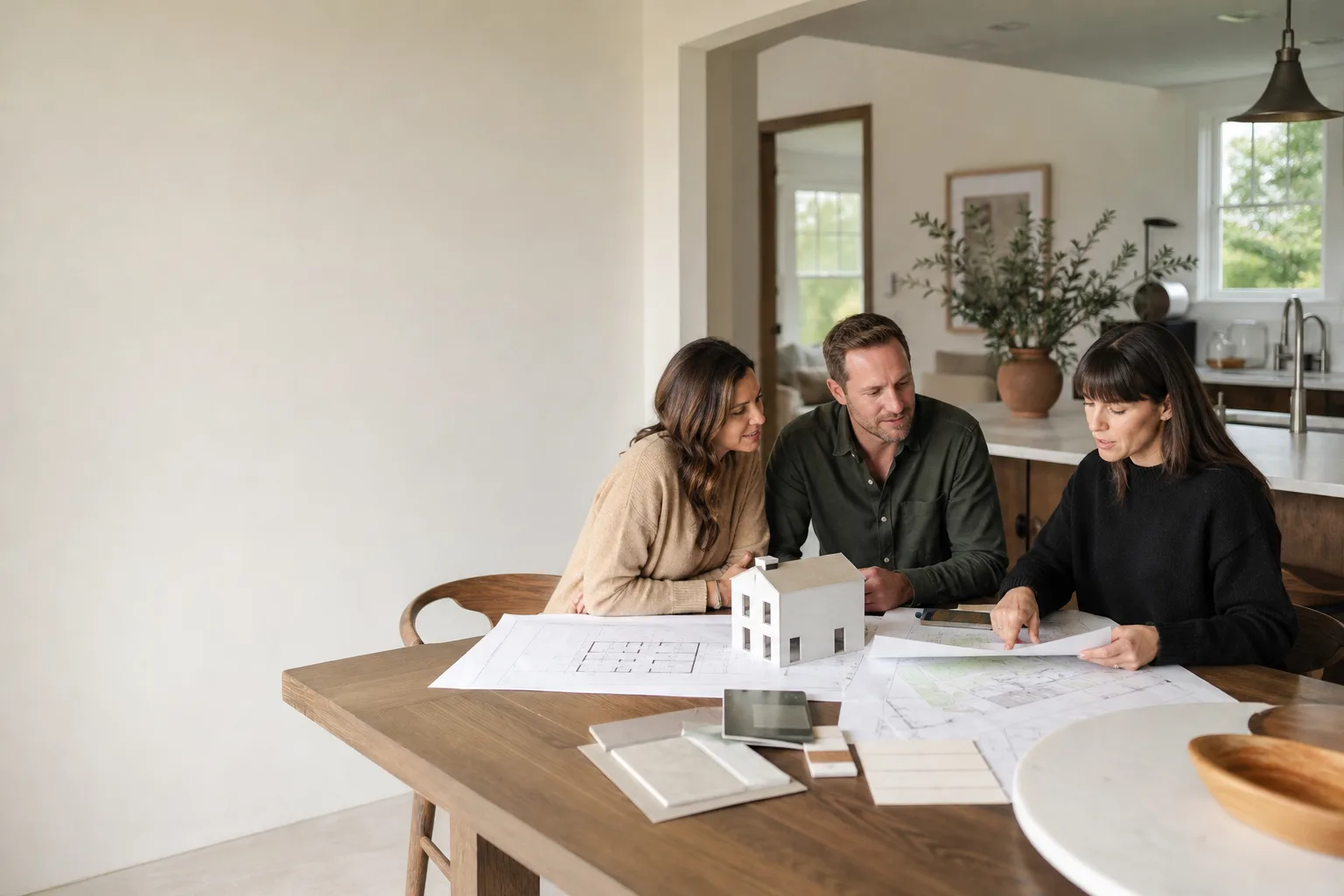
Permit Application in San Antonio, TX
Permit application in San Antonio is the paperwork and plan-review step that gets your ADU, garage conversion, or home addition legally approved by the City of San Antonio before any framing hammer swings. For most projects inside city limits, you’re looking at 3 to 8 weeks for residential permit approval, with fees typically running $1,200 to $4,500 depending on project scope, square footage, and whether you’re adding new electrical service or tying into existing utility lines. At Seedling ADU San Antonio, we handle the entire permit application for you: drawings, submittals, corrections, and resubmission until the permit is in hand and posted on your job site. Call (210) 981-6358 any time to talk through what your specific lot will require.
Most homeowners who call us have already discovered that San Antonio’s permitting process is not a one-size-fits-all proposition. A detached ADU behind a 1920s bungalow in Monticello Park goes through a different review path than a garage conversion off a cul-de-sac in Stone Oak. We’ve carried both through. Our team works inside the City of San Antonio’s Development Services Department system daily, and we handle the parts that slow most people down: resubmittal letters, historic review when needed, tree preservation checks, and the quiet coordination with Bexar County floodplain rules that apply to certain lots near Salado Creek or Leon Creek. This page will walk you through what permit application actually involves, what it costs, how long it takes, and how our process keeps the rest of your life uninterrupted while the paperwork moves.
This is a focused piece of the larger ADU Design & Permitting service we offer across San Antonio and surrounding areas. If you’re still deciding whether an ADU even fits your lot, start there. If you’re ready to understand permits specifically, keep reading.
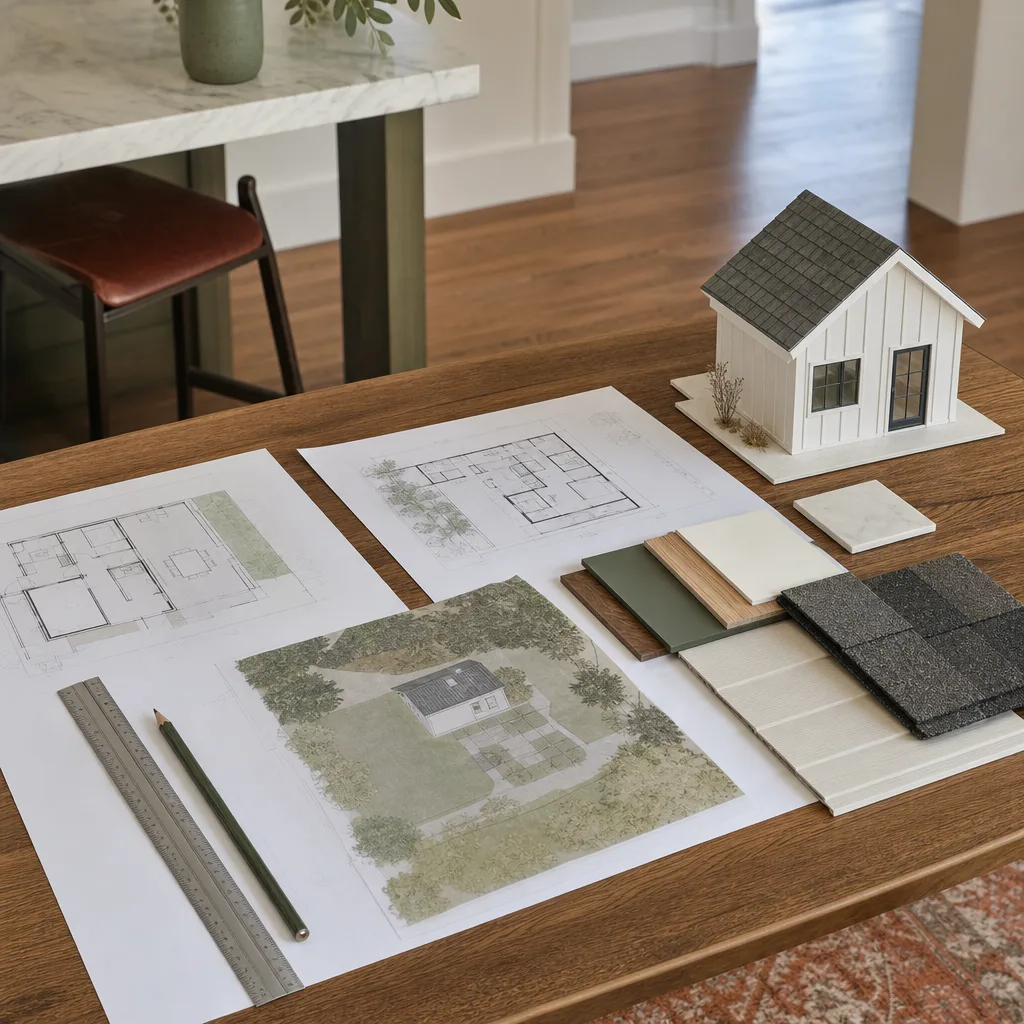
When You Need Permit Application
If you’re building on your San Antonio property, you almost certainly need permits. The City of San Antonio is strict about unpermitted residential construction, and Bexar County appraisers flag unpermitted square footage during tax assessments and resale disclosures. Here’s when our permit application service is the right fit:
- You’re adding a detached ADU in your backyard. Any new residential structure over 200 square feet requires a building permit, and most San Antonio neighborhoods with R-4 or R-5 zoning now allow ADUs by right, but the paperwork still has to be complete and correct on first submittal to avoid weeks of back-and-forth.
- You’re converting a garage into living space. Garage conversions in San Antonio trigger residential building permits plus electrical, mechanical, and sometimes plumbing trade permits. We see a lot of these in older neighborhoods like Jefferson and Beacon Hill, where detached garages were built before current code and need engineering review for the slab and roof structure.
- You’re adding a bedroom, bathroom, or second-story addition. Even smaller additions require a permit application with architectural drawings that show header sizes, egress windows, and tie-in details to the existing roof. City reviewers in San Antonio are especially careful about foundation plans on additions, given our expansive clay soils.
- You bought a house with unpermitted work and need to legalize it. This happens more than you’d think in San Antonio. A previous owner enclosed a patio or converted a carport, and now you want to sell or refinance. The City has a process for retroactive permits, and the application is different from a new-build submittal.
- You’re installing a prefab or modular ADU. Even when the structure arrives on a truck, San Antonio still requires a permit application, foundation documentation, and utility connection approvals. We work directly with ADU Design & Permitting in San Antonio roadwork so prefab brands like Boxabl and Plant Prefab slide through plan review without revision cycles.
- You tried to self-file and got a correction letter. The City’s online portal accepts residential submittals from homeowners, but a correction letter with ten line items of code citations is the moment most people call us. We’ve taken over dozens of stalled applications that homeowners started on their own.
One note worth making: permit application is not the same as design. If you need drawings, floor plans, or structural engineering before the permit work can start, that falls under our broader ADU design service. If you already have plans from an architect and just need someone to carry the permit through the City, this is exactly what we do.
Our Permit Application Process
Most people assume the process is just “fill out a form and wait.” It’s not. Here’s how we actually move a permit application through San Antonio’s Development Services Department, step by step.
- Project intake and document audit. We start by reviewing what you have: lot survey, existing floor plan, your goals for the ADU or addition, and any HOA documentation. Homeowners associations in master-planned communities like Alamo Ranch and Cibolo Canyons have their own approval layers, and we coordinate those in parallel so they don’t stall the City review. Ben Ortega himself walks through every intake before we commit to a timeline.
- Code research and application strategy. Before we submit anything, we check zoning, overlay districts, historic designations, floodplain status, and current City of San Antonio code requirements for your specific project type. This step prevents the most common rejection reasons: wrong use classification, missing tree survey, or insufficient fire separation between the ADU and the main house.
- Drawing coordination and submittal assembly. We gather or produce the full drawing set: site plan, floor plan, elevations, structural details, electrical layout, and Title 24 energy documentation. Every sheet is checked against the City’s most recent submittal checklist before anything goes in. We’d rather spend an extra afternoon checking than wait three weeks for a rejection letter.
- Electronic submittal through the City portal. San Antonio uses an online system for residential permits. We submit the complete package, pay the initial plan review fees, and track the application through every review stage. You receive a written confirmation from us the same day we file, so you’re never wondering whether anything was actually submitted.
- Correction response and resubmittal. Most San Antonio residential permits get at least one round of reviewer comments. It’s not a failure; it’s the process. When comments come back, we address each one with revised pages and a point-by-point response letter. Because we’ve done this hundreds of times across San Antonio, our correction letters tend to close out on the first resubmittal.
- Permit issuance and job-site posting. When the permit is approved, we print and post the permit card at the job site, as the City requires. Then construction can begin. If you’re building with Seedling, the same team that ran your permit also manages your build, so there’s no handoff confusion between an outside permit runner and a separate contractor.
Throughout the process, our crews and office team follow the Cedarwell Care Promise: shoe covers and drop cloths inside the home, pet-safe products where there is a choice, a photo of the clean-up before the crew leaves, and a live person available by phone 24/7. Even during the permit phase, when most of the work is on paper, we keep that same standard when we visit your property for measurements.
Permit Application Pricing in San Antonio
We believe every family should see a written price before any work starts, and that includes the permitting phase. Here’s what permit application realistically costs in San Antonio, based on what we see across the city.
Our Permit Application Fees
- Standalone permit application service (you have plans ready): $2,400 – $4,800 depending on project complexity and review cycles.
- Permit application bundled with Seedling design work: $1,800 – $3,200 as part of a full design-and-permit package.
- City of San Antonio plan review and permit fees (passed through to you, no markup): typically $900 – $2,600 for residential ADUs and additions under 1,200 square feet.
- Expedited review add-on (when available through the City): $500 – $1,200 depending on project type and current review backlog.
- Engineering stamps and soil reports (if required for your lot): $800 – $2,500 depending on scope. Expansive soil lots near the Medical Center or along the IH-10 corridor often need geotechnical review.
Every project receives a written price before any work begins. No exceptions. The number we give you at intake is the number you pay at permit approval. If the City returns comments that require additional engineering, we tell you before we spend a dollar, and you approve the added scope in writing before we proceed.
What affects the cost the most is your project’s review path. A simple detached ADU on a flat lot in an HOA without historic overlay will run through the standard path in four to six weeks. A garage conversion in a historic district like King William or Monte Vista requires review by the Office of Historic Preservation, and that adds both time and fee layers. A lot in a floodplain near the San Antonio River adds a Bexar County review step. We’ll tell you which path applies to your lot before we quote the price, so the number you get is the number you can plan around.
For homeowners still weighing whether to build at all, the cost of a permit application is a small fraction of the total project. A 600-square-foot ADU in San Antonio typically runs $180,000 to $260,000 including design, permits, and construction. Getting the permit right at the start is the cheapest insurance against a failed inspection or a resale problem later. Call (210) 981-6358 for a free estimate on your specific project, and we’ll walk you through the exact fee schedule for your lot.
Why San Antonio Homeowners Choose Us for Permit Application
Every city has its own permitting personality. San Antonio’s is a blend of old-school thoroughness and new digital workflow, and you need someone who knows both to keep a file moving. Here’s what families tell us matters most when they choose Seedling ADU San Antonio for permit work.
First, we show up with the right documents the first time. Ben Ortega has run permit applications for ADUs, garage conversions, and additions across every corner of San Antonio, from the tightly zoned lots near Woodlawn Lake to the newer subdivisions west of Loop 1604. That experience means we know what a plan reviewer will flag before the reviewer does. Fewer correction cycles means your permit arrives sooner.
Second, we protect your home while we’re working on your project. Even during the paperwork phase, we visit your property to measure and photograph. Our background-checked, uniformed technicians wear shoe covers and lay down drop cloths before walking through the house. If you have kids or pets, you’ll know exactly who is at your door and what they’re doing there. There is no surprise unmarked truck in your driveway at 7:00 a.m.
Third, we put our work in writing. The price we quote for permit application is fixed. The scope is itemized. The timeline is stated in weeks, not “whenever the City gets to it.” And every completed project is covered by the 365-Day Done Right Promise: if it’s not done right, we make it right, in writing, before we ever start.
We also give you real options on product choices, not just what’s cheapest for us to build. If you’re planning a prefab ADU, we have hands-on access to leading systems including Boxabl, Plant Prefab, and Tuff Shed, and we know which products clear San Antonio’s plan review process smoothly. If you’re building a site-built structure, we specify James Hardie materials for durability in San Antonio’s heat and humidity. The permitting path differs slightly for each, and we’ll steer you to the one that fits your budget and timeline.
What the City of San Antonio Actually Reviews
When you submit a permit application, you are asking the City to confirm that your project meets the building codes and land-use rules that apply to your lot. San Antonio’s reviewers are checking specific things, and understanding what they look at helps you understand why the process takes the time it does.
Building code reviewers check structural drawings for foundation loads, roof tie-downs, and wall framing. San Antonio sits on expansive clay in many neighborhoods, which means the reviewer will look at the foundation section closely. A pier-and-beam foundation on a 1940s lot in Jefferson will have different requirements than a slab on grade in a newer Stone Oak subdivision. The reviewer is not being difficult; they are making sure your addition does not crack itself apart during a wet-dry soil cycle.
Electrical reviewers check the service panel size, branch circuit counts, and the proposed location of new outlets and fixtures. If your ADU needs a new electrical service drop from CPS Energy, that has to be coordinated in the permit file. Mechanical reviewers check the HVAC system for proper sizing and duct design. Plumbing reviewers check drain line sizes, venting, and water heater requirements.
Zoning reviewers check setbacks, lot coverage, height limits, and parking. That’s where we see the most surprises for homeowners. A detached ADU in a standard San Antonio neighborhood needs a 5-foot side setback, an 8-foot rear setback, and typically one additional parking space unless the lot is within a quarter-mile of a transit stop. If your lot is 40 feet wide, those numbers matter. If the ADU breaks a setback even by a few inches, the permit is denied, and you’re back in the queue for another review cycle.
Historic and conservation district reviews add a separate layer. Houses in the King William Historic District, the Monte Vista Historic District, or any of the City’s other designated areas need approval from the Office of Historic Preservation before building permits are issued. That office cares about exterior materials, rooflines, and visibility from the street. It takes additional time, and the application materials are different. We have worked through that process, and we’ll tell you at intake if your lot is in a review overlay.
Common Permit Application Mistakes in San Antonio
We have inherited enough stalled permit applications to know exactly where DIY filing goes wrong. Here are the mistakes we see most often from San Antonio homeowners who tried to file on their own.
- Using a generic internet drawing package with no structural details. The City of San Antonio requires specific drawing sheets, and store-bought plan sets often lack the foundation section, framing schedule, or Title 24 energy documentation the reviewer wants. The result is a correction letter that asks for engineering you never intended to buy.
- Missing the zoning check before spending money on drawings. We have seen homeowners pay an architect $4,000 for drawings on a lot where the ADU they want is simply not allowed. In San Antonio, some neighborhoods have private deed restrictions that are stricter than City zoning, and neither the architect nor the City will flag that for you without a title review.
- Filing a “remodel” permit for what is actually an addition. The City classifies projects by scope, and misclassifying your project gets you a review under the wrong code section and a rejection letter. It can add four weeks to your timeline.
- Forgetting the tree survey. San Antonio has tree preservation rules, and certain lots with protected trees (live oaks in particular) need a tree survey filed with the permit. If your lot has a mature live oak anywhere near the proposed ADU footprint, plan for this.
- Ignoring the HOA approval layer. Neighborhoods with private covenants, including many of the newer developments off Highway 151 and in far northwest San Antonio, require HOA sign-off before City submittal. Some HOAs have their own design review boards that take 30 days. We coordinate both tracks at the same time.
None of these are failures of the homeowner. They are failures of a complex system that changes every code cycle. Ben and the team at Seedling ADU San Antonio spend our workdays inside this system so you don’t have to learn it by trial and error.
Permit Application Timelines in San Antonio Right Now
We track City of San Antonio review timelines weekly, because they shift with staffing and application volume. As of this writing, a standard residential building permit for an ADU or addition is taking roughly 4 to 6 weeks from submittal to issuance, assuming no major corrections. Trade permits (electrical, mechanical, plumbing) run 1 to 2 weeks when filed in parallel. Historic review overlays add 2 to 4 weeks. Floodplain review adds 1 to 2 weeks. Your total timeline will depend on which layers apply to your lot.
We will not promise you a date the City cannot meet. What we will promise is that we track every submitted file, respond to comments within 48 hours of receiving them, and tell you the moment anything changes. If a review is delayed, you hear it from us the same day, not in a status dashboard you have to check yourself.
And if you are building with Seedling, the permit timeline runs in parallel with material ordering and job scheduling. We don’t wait for the permit to drop before we start lining up the lumber package or prefab shipment. That’s how we keep total project time as short as possible without cutting corners on the paperwork itself.
San Antonio Neighborhoods We Serve for Permit Application
Our permit application service covers all of San Antonio and the surrounding communities inside Bexar County. Some of the neighborhoods we’ve recently run permits in include:
- Alamo Heights and Terrell Hills – separate municipalities with their own permitting departments, tighter setbacks, and stricter design review. We know their local code amendments and file accordingly.
- King William and Lavaca – historic districts with Office of Historic Preservation review. These projects take longer, but they’re some of our favorite work because the finished ADUs look like they were always there.
- Monte Vista and Monticello Park – older homes with pier-and-beam foundations, and permit applications that require careful structural coordination with the existing house.
- Stone Oak and far north San Antonio – HOA-heavy neighborhoods where the private review layer often takes as long as the City review. We run both tracks in parallel from day one.
- West Side and the Jefferson corridor – lots of garage conversions and backyard cottages, often with older electrical panels that need service upgrades as part of the permit scope.
- Southside and the Mission Reach area – growing neighborhoods with newer subdivisions and fewer overlays, which means permits tend to move a little faster.
Wherever your lot sits, our process is the same: written price first, clear scope, communication throughout, and a permit in hand before construction starts. Call (210) 981-6358 and we’ll tell you what to expect for your specific street.
FAQs – Permit Application
How much does a permit application cost in San Antonio?
A permit application for an ADU, garage conversion, or addition in San Antonio typically costs $2,400 to $4,800 for our service, plus $900 to $2,600 in City plan review and permit fees, which we pass through without markup. Your total depends on project scope, lot conditions, and whether you already have stamped drawings. Call (210) 981-6358 for an exact written quote on your specific project, free of charge.
How long does it take to get an ADU permit in San Antonio?
A standard residential ADU permit in San Antonio currently takes 4 to 6 weeks from submittal to issuance, assuming complete drawings and no major review corrections. Lots inside historic districts or floodplains add 2 to 4 weeks to that timeline.
Can you take over a permit application I already started?
Yes. If you submitted an application through the City portal and received a correction letter or a rejection, we will review your file, revise the drawings if needed, and resubmit on your behalf. We have taken over dozens of stalled San Antonio permit applications and gotten them through without starting from scratch.
Do I need a permit for a prefab ADU from Boxabl or Plant Prefab?
Yes. Even a factory-built unit requires a City of San Antonio building permit, foundation documentation, and utility connection approval before installation. The review path is slightly different for prefab units, and our experience with these systems means fewer correction cycles. Call us to discuss which prefab product fits your lot and budget.
What happens if my permit gets denied?
A denial in San Antonio is rare when the submittal is complete, but if it happens, we address every comment with revised pages and a point-by-point response letter, then resubmit. We do not charge you extra for responding to standard City comments; that work is included in our original written price.
Get Your Permit Application Started in San Antonio
If you’re planning an ADU, garage conversion, or home addition in San Antonio, the permit application is the first project milestone that matters. It’s the gate between an idea and a legal build. Getting it right from day one saves you weeks and thousands of dollars on the other side.
Call (210) 981-6358 for a free estimate and a plain-language conversation about your lot, your plans, and what your permit path looks like. You’ll get a live person on the phone, a written price before any work starts, and the same calm, careful attention we bring to every San Antonio family we work with. Visit our home page to learn about our full range of services, or dive into ADU Design & Permitting in San Antonio for the complete picture.
Written by Ben Ortega, Owner at Seedling ADU San Antonio, serving San Antonio.


