
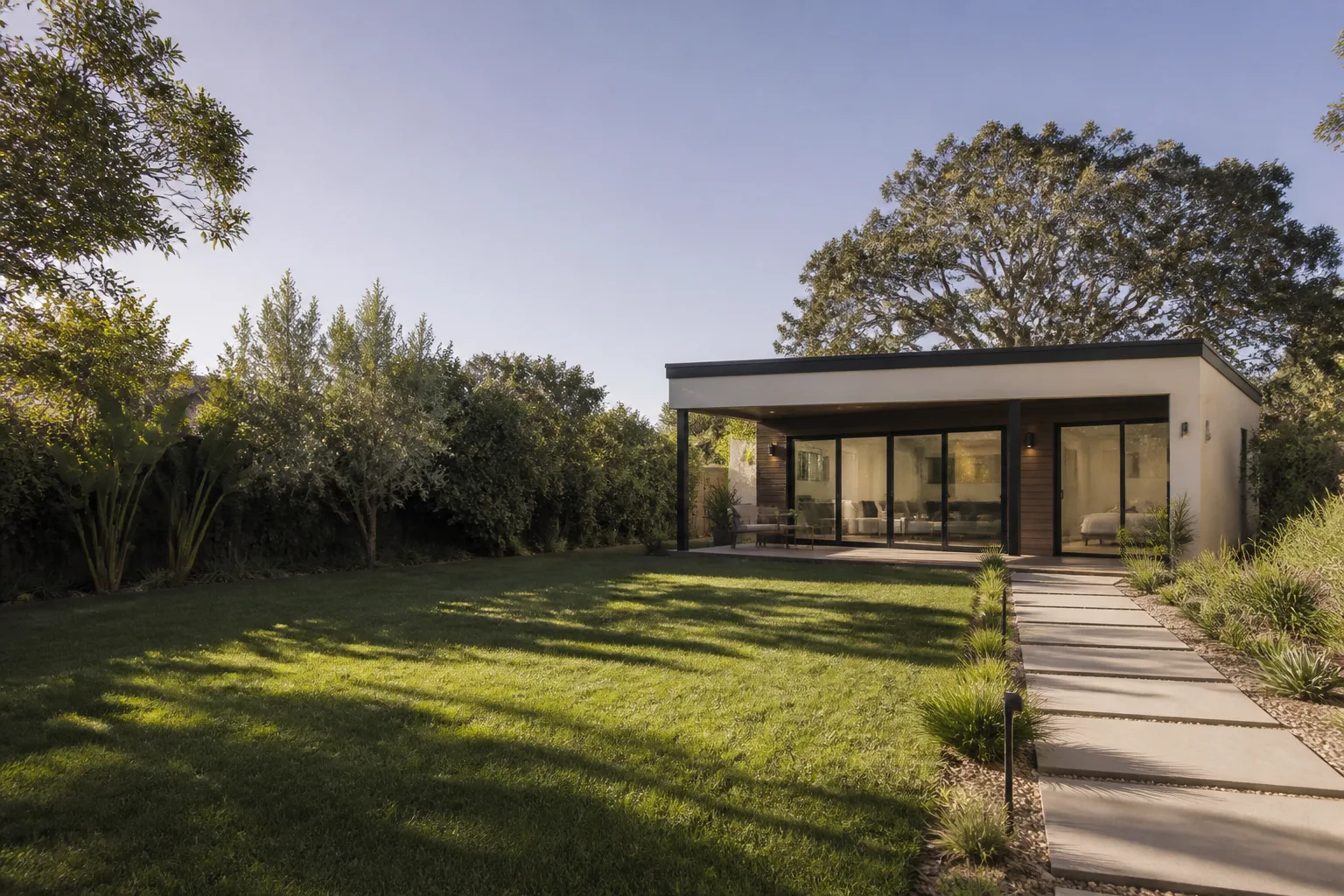
Tuff Shed New Detached ADU: The San Antonio Owner’s Guide
If your Tuff Shed structure is being converted into a detached ADU, the “part” that fails most often isn’t a bracket or a hinge – it’s the foundation connection and floor framing system that Tuff Shed originally designed for storage loads, not living loads. In San Antonio, we regularly replace and retrofit these connection points, floor joists, and anchor systems because the original build wasn’t spec’d for a bathroom, kitchenette, insulation, drywall, and people. Installed retrofit work on a Tuff Shed-to-ADU conversion in San Antonio typically runs $4,800 to $12,400 depending on floor framing condition, tie-down requirements, and whether the existing skids or slab can be reused.
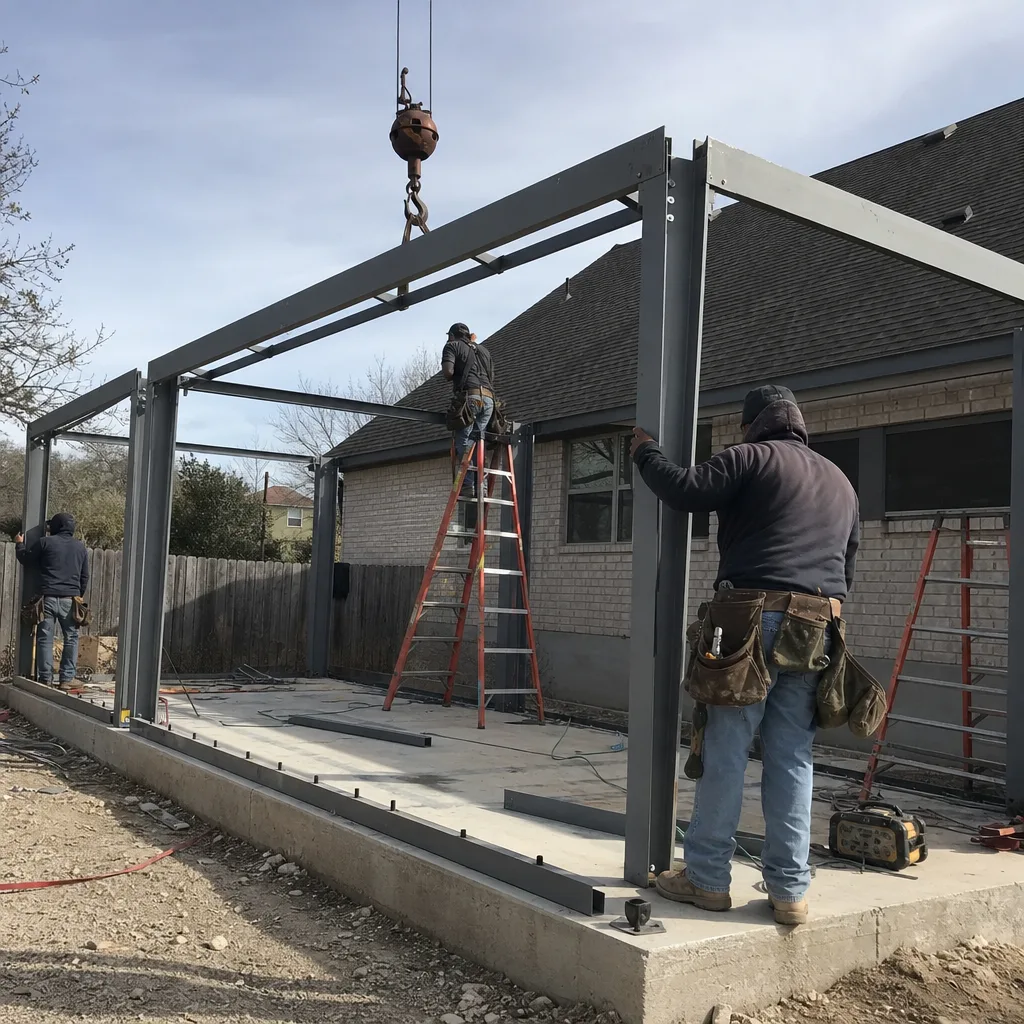
Most owners discover the problem the way you just did: a soft spot in the floor near where the bathroom will go, a door that suddenly won’t latch square, or a musty smell that tells you moisture has been sitting against untreated lumber. The shed worked fine for lawn equipment. A new detached ADU asks more of it.
Which Tuff Shed Models This Applies To
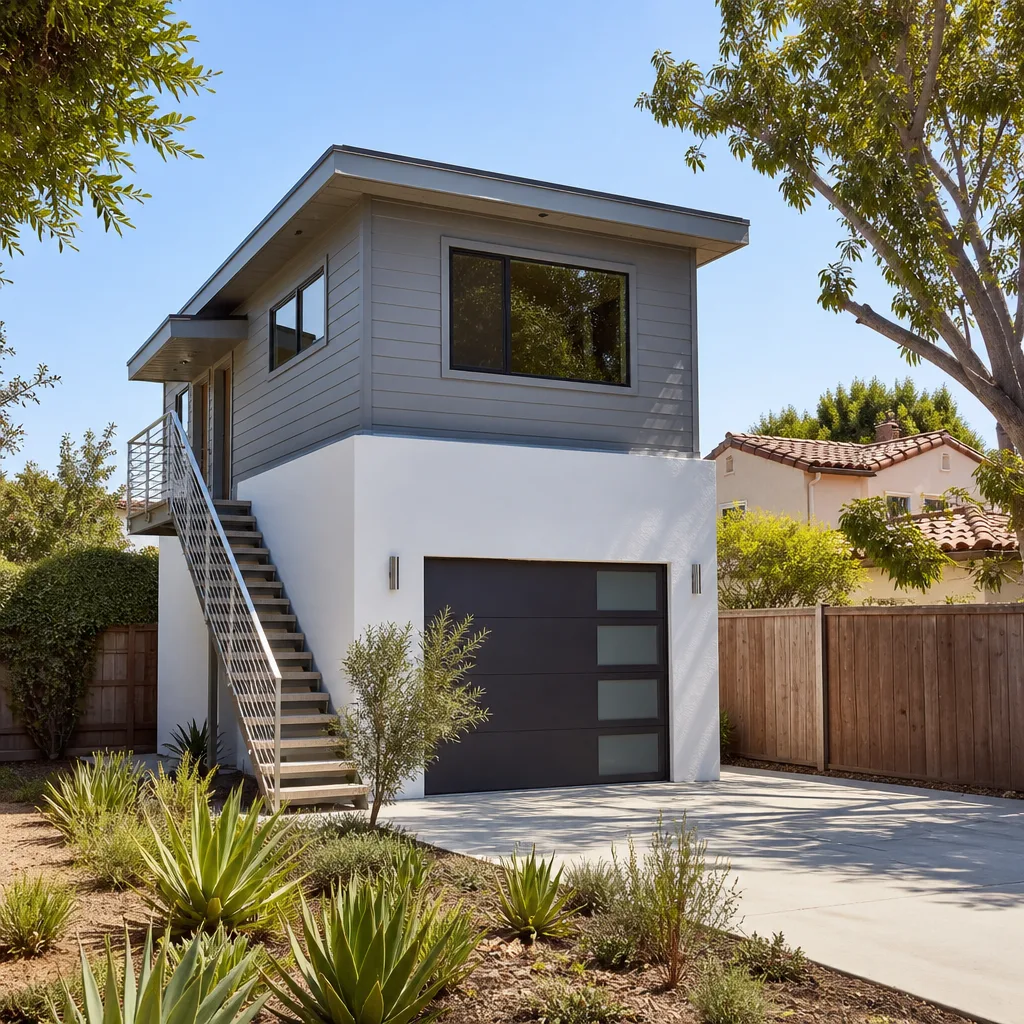
We work on Tuff Shed Premier Pro, Premier Ranch, and Sundance series buildings most often in San Antonio, but the retrofit approach applies to any Tuff Shed with a wood floor system that’s being converted to living space. The critical identification step is checking your floor framing: most Tuff Shed storage models use 2×4 or 2×6 floor joists on 16-inch or 24-inch centers, which is lighter than the 2×8-or-larger framing a habitable ADU needs under San Antonio’s adopted building codes. The difference matters, and it’s the first thing we measure.
On the OEM side, Tuff Shed’s factory floor systems are glued and nailed for storage loads. Good lumber, honest work – but not built for a shower pan, a kitchen sink, a stacked washer-dryer, and two people walking across the same joists every day for twenty years. We use pressure-treated lumber and engineered tie-downs from suppliers that meet Bexar County’s wind and uplift requirements, and we match any existing anchoring hardware to the original Tuff Shed install rather than assuming it’s reusable. In our experience, roughly seven out of ten Tuff Shed floors we see in San Antonio need some structural stiffening before a permit inspector will sign off on the conversion.
Seedling ADU San Antonio is an independent builder and service provider. We’re not affiliated with Tuff Shed, which means we can make the framing decisions the structure actually needs without being tied to a factory parts list.
Signs Your Tuff Shed New Detached ADU Is Failing
- Spongy or dipping floor near the planned bathroom or kitchen. Storage-rated joists deflect under concentrated weight, and once you add a toilet, a shower, and a water heater, that deflection becomes visible and permanent. We usually find the worst sag within three feet of where water fixtures will sit.
- Doors and windows that stick or drag seasonally. San Antonio’s clay soil expands and contracts with rain and drought, and a Tuff Shed on shallow skids or a thin slab will move. The structure racks slightly, and the door frames tell you before anything else does.
- Musty smell or dark staining at the floor perimeter. Tuff Shed floor systems sit low to the ground, and San Antonio gets real rain in May and September. Without the ventilation and moisture barrier a living space requires, the underside of the floor becomes a slow mold factory.
- Visible gaps between the floor decking and the wall bottom plates. Storage sheds are assembled quickly and economically. Once you load the walls with drywall, insulation, and cabinetry, any original gap becomes a path for humidity, ants, and eventually bigger problems.
- Anchor bolts that are rusted, loose, or missing. Wind uplift requirements for an occupied ADU in Bexar County are stricter than for an unoccupied shed. We frequently find the original anchor pattern insufficient for what the county now requires, even when the Tuff Shed itself is only a few years old.
Replacement Cost & What’s Included
In San Antonio, expect to pay $4,800 to $7,200 for basic floor stiffening: sistering additional joists, adding blocking, and installing a proper moisture barrier underneath. A full floor replacement, including new pressure-treated joists sized for habitable loads, runs $7,500 to $12,400 depending on the shed’s footprint and the condition of the existing foundation. If the structure is on a slab that’s cracked or out of level, budget on the higher end because leveling and moisture correction come first.
Every quote includes the written price before we touch anything, the lumber and hardware we’ll use, the permit-ready framing details, and cleanup at the end of each day. We don’t hand you a number and then “discover” issues once the floor is open. Ben Ortega prefers to walk the shed with you, point at the exact joists that need attention, and tell you what it costs before a single board is pulled up.
DIY or Call Us?
You can safely inspect a Tuff Shed floor yourself: look for sag from underneath, check for moisture staining, and press a screwdriver into any suspicious wood. Those are good homeowner checks, and they’ll tell you whether you have a problem. What we don’t recommend is cutting into the floor framing or attempting to jack and level the structure on your own. A shed under load can shift suddenly, and the framing decisions that make a storage floor into an ADU floor involve load paths, moisture detailing, and connection hardware that most weekend projects get wrong in ways that are expensive to undo.
If the floor moves when you walk on it, or the door won’t close square, call us at (210) 981-6358. We’ll look at it and give you an honest answer about what it needs, even if that answer is “not much.”
FAQs
A storage-rated Tuff Shed floor in San Antonio’s heat and humidity typically shows meaningful deflection within two to four years of being loaded with living-space weight. Properly stiffened and moisture-protected framing should last the life of the ADU.
About six in ten San Antonio Tuff Shed conversions we see can use the existing floor decking if the joists underneath are sound and only need stiffening. If there’s active rot or the decking has delaminated from moisture, replacement is cheaper over time than patching. We’ll tell you which one you have after we look at it. Call (210) 981-6358 and we’ll schedule that walk-through.
Most Tuff Shed floor stiffening and moisture correction takes two to four working days. Full floor replacement usually runs five to seven days, including inspection-ready framing. The schedule is in your written quote before we start.
We bring everything: pressure-treated lumber, engineered tie-downs, moisture barrier, and all connection hardware. You shouldn’t need to source a single board. We also keep compatible parts and materials on hand from the other ADU brands we work with – Abodu, Cover, and Dvele – so if your project grows past the Tuff Shed shell, the same crew can handle it.
Tell me what you need the space to do, and we’ll figure out the rest from there. Call (210) 981-6358 for a free estimate on your Tuff Shed ADU conversion in San Antonio, and we’ll give you a written price before any work begins.
Written by Ben Ortega, Owner, Seedling ADU San Antonio at Seedling ADU San Antonio, serving San Antonio and nearby areas.


