

Site Assessment in San Antonio, TX
A site assessment for an ADU in San Antonio tells you whether your lot can actually support the home you’re imagining. It’s the step where someone walks your property with a practiced eye, measures what’s there, checks setbacks and access, and tells you plainly what will work and what won’t. Most San Antonio homeowners who call us for an ADU Design & Permitting in San Antonio project start here, because building a backyard home without first understanding the land is how budgets quietly double. If you’re considering a garage conversion, a backyard cottage, or a home addition anywhere from Alamo Heights to Helotes, call Seedling ADU San Antonio at (210) 981-6358 and we’ll schedule a walkthrough. The site visit is always free, and you’ll leave it with a written answer, not a sales pitch.
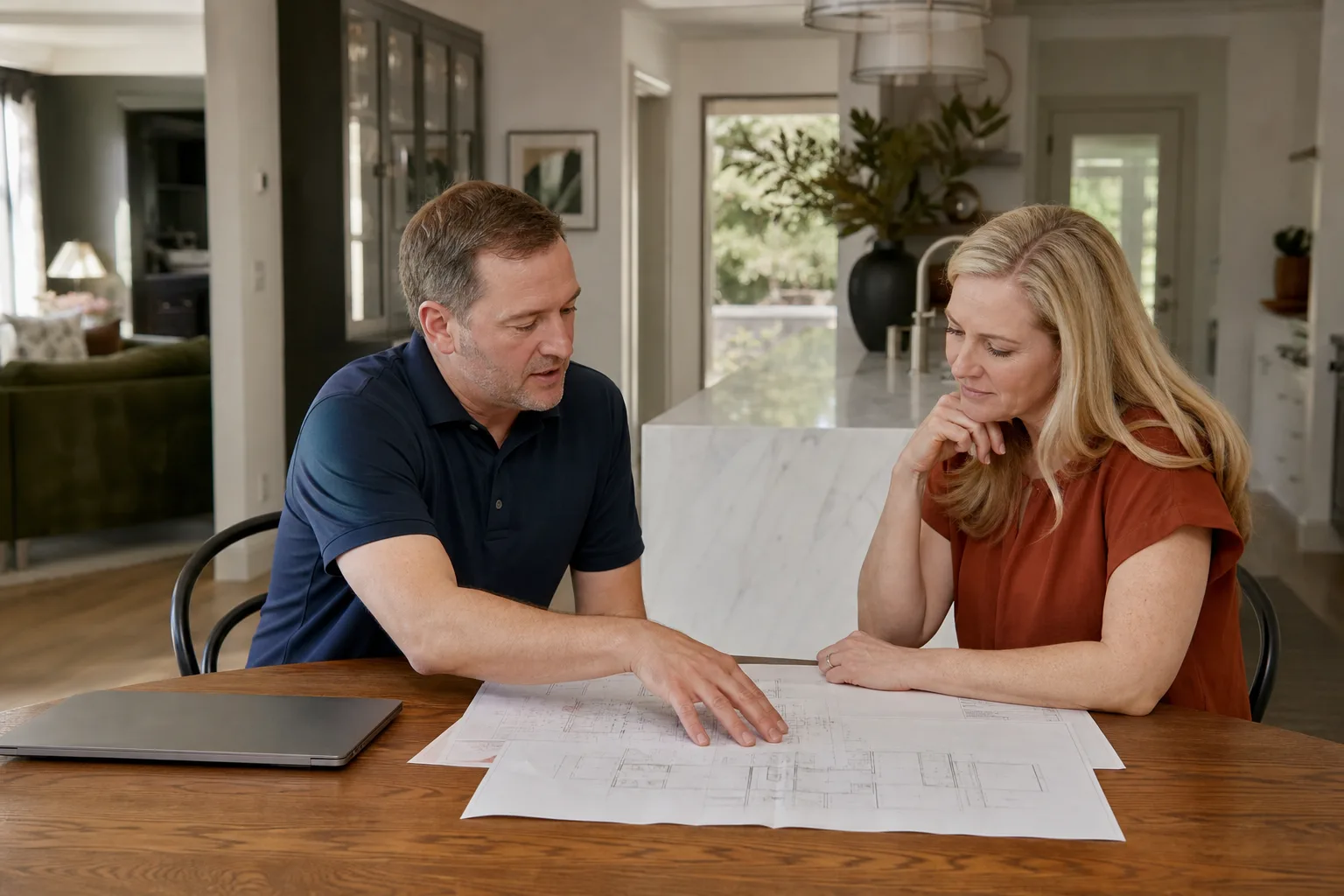
When You Need Site Assessment
A site assessment is not a formality. In San Antonio, it’s the difference between a build that sails through permitting and one that stalls for months. Here’s when a property walk makes sense:
- Your lot slopes more than you think. San Antonio sits on the Balcones Escarpment, and plenty of lots west of I-10 and up toward Leon Springs have grades that look gentle until someone runs a laser level across them. A sloping lot changes foundation type, drainage design, and sometimes the ADU’s placement entirely.
- You live in a historic district or a neighborhood with deed restrictions. King William, Monte Vista, Mahncke Park, and similar pockets carry overlay rules that can limit ADU height, exterior materials, or even whether a detached structure is allowed at all. We check the local code and the HOA restrictions before you spend a dollar on design.
- Your yard has large heritage oaks or other protected trees. San Antonio’s tree ordinance applies to many residential lots, and a 200-year-old live oak can dictate where a foundation can and cannot go. We flag every tree on the plat and measure its canopy before you commit to a floor plan.
- You’re not sure where utilities run. Sewer laterals, water lines, and electric services in older neighborhoods like Jefferson and Beacon Hill often run through the exact spot where a backyard ADU would logically sit. Moving a sewer line can cost $8,000 to $15,000. Knowing that before design saves rework at plan stage.
- You want an honest read on access. A prefab unit from Plant Prefab or Boxabl arrives on a trailer. If the only path to your backyard runs through a 5-foot gate beside the house in Terrell Hills, we need to know that now, not on delivery day.
- You’ve heard conflicting opinions from contractors. If one builder says your lot is fine and another says it’s impossible, a methodical site assessment gives you a written report you can hand to any third party. It removes the guesswork and the gamesmanship.
Our Site Assessment Process
Seedling ADU San Antonio runs every site assessment with the same care we bring to a finished build. You’ll know exactly what we’re checking, what we find, and what it means for your budget. Here’s how it works:
- We walk the full property with you. Ben Ortega or a senior member of the build team walks every foot of your lot in San Antonio with you present. We listen first: how you want to use the ADU, who will live there, what your timeline looks like. Then we talk specifics. You’ll get direct answers, not vague assurances.
- We measure setbacks, easements, and buildable area. City of San Antonio code sets specific side, rear, and front setbacks for detached structures. We pull your plat, check your zoning designation, and measure the actual buildable rectangle on the ground. Some lots in established areas like Tobin Hill or Alta Vista have irregular shapes that look bigger on paper than they build.
- We check subsurface conditions with a preliminary soils review. San Antonio’s soil ranges from rocky limestone in the Hill Country to expansive clay in the eastern and southern parts of the county. Clay soil moves with moisture; limestone requires different foundation work. We review the USDA soil survey for your parcel and note what the foundation contractor should expect. If a full geotechnical report is warranted, we tell you that plainly and explain what it costs.
- We map utility locations and flag conflicts. We locate the existing water line, sewer lateral, and electrical service, then compare them against where the ADU would logically sit. In neighborhoods with older infrastructure, like Los Angeles Heights or Denver Heights, this step routinely saves homeowners from a surprise five-figure utility relocation.
- We evaluate access for construction crews and, if relevant, prefab delivery. If you’re considering a unit from ADU Design & Permitting with a prefab option like Boxabl or Plant Prefab, we measure every gate, fence opening, and overhead clearance. A unit that can’t physically reach your backyard changes the conversation from prefab to site-built, and it’s better to know that in week one.
- We deliver a written site report with clear next steps. Within a few days of the walk, you receive a written summary: what we found, what it means, what the next steps cost, and what order to do them in. No verbal hand-waving. No “trust us.” A written record, the same way we handle every project at Seedling.

Site Assessment Pricing in San Antonio
A standalone site assessment in San Antonio typically runs between $250 and $600, depending on lot size, access difficulty, and whether you need a full survey or just a builder’s walkthrough. At Seedling ADU San Antonio, the site assessment is included at no charge when you move forward with design and permitting through us. That means the initial visit, the measurements, the utility review, and the written report cost you nothing if we build your ADU. You’ll get a written price for the full project before any work begins, including design, permits, and construction phases broken out line by line. No surprise line items, no “we discovered something” upcharges after crews arrive.
What affects the cost of a site assessment when it’s billed separately:
- Lot size and topography. A flat, quarter-acre lot in Stone Oak takes less time to walk than a sloping half-acre in Shavano Park with creek-side setbacks.
- Need for a boundary survey. If your property corners are unclear or an old fence may be off the line, a licensed survey may be required. Surveys in San Antonio currently run between $500 and $1,200 for a typical residential lot.
- Protected tree evaluation. If heritage oaks are present, an arborist report may be needed. Arborist reports in the San Antonio area generally cost $300 to $700.
- Geotechnical boring, if required. When soil conditions are questionable, a geotechnical engineer may take soil borings. That runs $1,800 to $3,500 in this market, depending on depth and access.
Every estimate we give is free. Call (210) 981-6358 and we’ll schedule the walkthrough at a time that works for your family, including evenings and weekends.
FAQs – Site Assessment
How long does a site assessment take in San Antonio?
Most site assessments take between 60 and 90 minutes on the property, plus a few days for our team to compile the written report. If we’re checking a large lot with significant slope or multiple tree canopies, allow closer to two hours. You’ll have the written findings in hand within three business days, and the quote for design and permitting follows shortly after.
Is it cheaper to skip the site assessment and go straight to design?
No. Skipping a site assessment in San Antonio is the most expensive shortcut in ADU design. A plan drawn without verifying setbacks, soil, utilities, and tree requirements often needs revision after the first city submittal, and every revision cycle adds weeks and design fees. The $250 to $600 you save upfront becomes $3,000 to $10,000 in rework. At Seedling, we include the site assessment in the design package precisely so this never happens.
Can you do a site assessment on a house I’m thinking about buying?
Yes, and we recommend it. If you’re under contract on a home in San Antonio and want to know whether an ADU is feasible before you close, we can schedule a walkthrough during your option period. Ben Ortega has walked dozens of properties for buyers from Castle Hills to Converse, and the written report gives you negotiating leverage or a clear go/no-go answer. Call (210) 981-6358 as soon as your offer is accepted, and we’ll work around your inspection schedule.
What happens after the site assessment?
You get a written report with our findings and a clear recommendation. If the lot works, we move into the ADU Design & Permitting phase: schematic layouts that fit your buildable area, material selections including options from James Hardie or Tuff Shed where they suit the project, and a written project price before any construction work begins. If the lot has constraints, we tell you exactly what they are and what they cost to work around. Either way, you leave with clarity and a plan, not pressure.
Does the site assessment include checking HOA rules and city permits?
Yes. We review the City of San Antonio zoning code for your property, including setback requirements, height limits, lot coverage, and building separation rules. We also check for any HOA or deed restrictions that apply to your neighborhood, from Stone Oak to Mahncke Park. If we find restrictions that would require a variance or a board appearance, we tell you what that process looks like in San Antonio and how long it typically takes. Nothing at this stage is left to guesswork.
Written by Ben Ortega, Owner at Seedling ADU San Antonio, serving San Antonio.


