
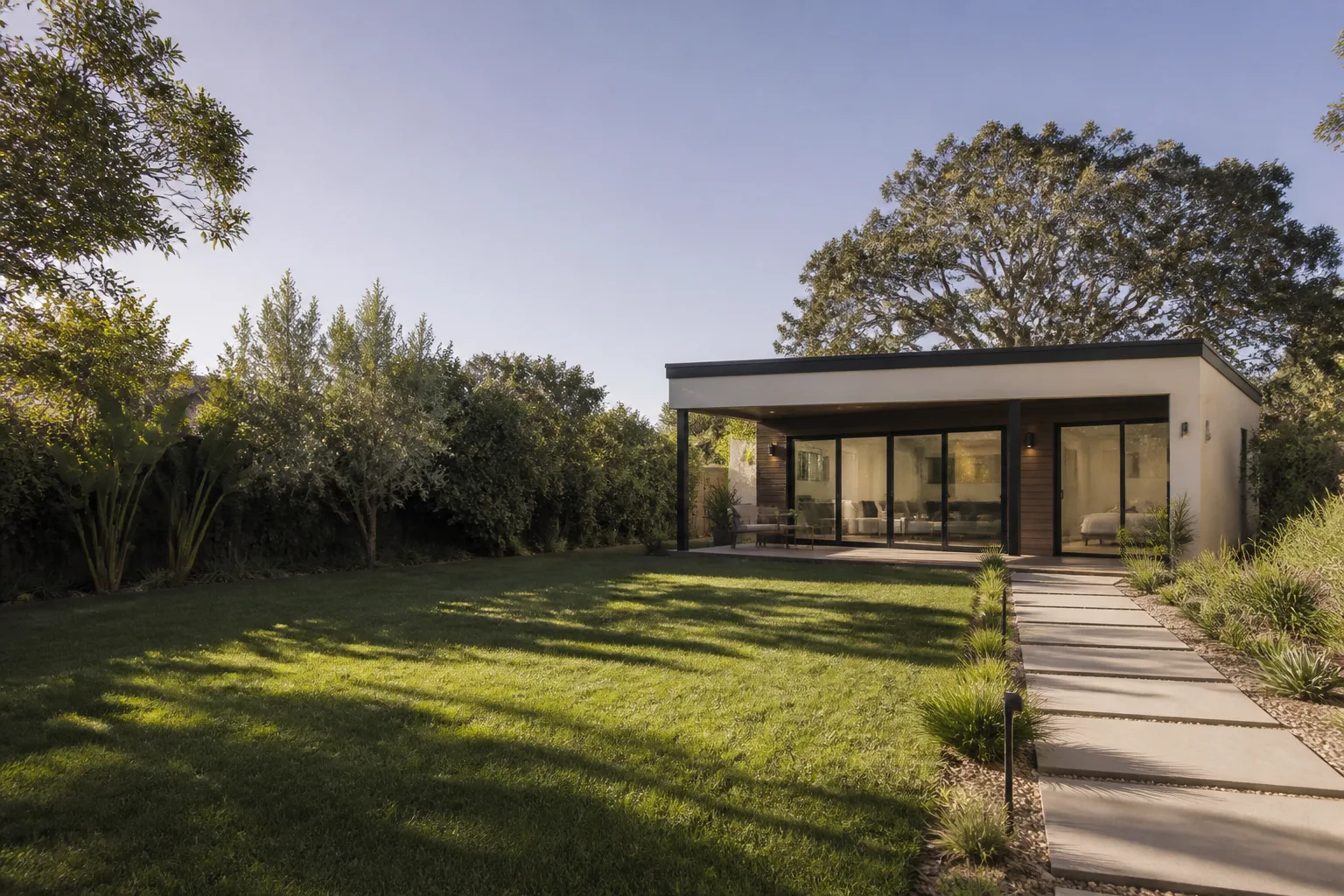
James Hardie New Detached ADU: The San Antonio Owner’s Guide
If you’re planning a new detached ADU with James Hardie siding or you’ve got an existing one in San Antonio that needs a material match, we stock the HardiePlank lap siding, HardiePanel vertical siding, and HardieTrim boards used on most San Antonio ADU builds. A typical Hardie siding package for a new 400 to 800 square foot detached ADU in San Antonio runs $8,500 to $21,000 installed, depending on the footprint, the number of windows and corners, and whether you choose standard lap siding or a mix of panel and trim details. Most homeowners call us after a hailstorm or a hard summer has left them staring at cracked boards or water stains, and they want to know if they can match what’s already on the house.
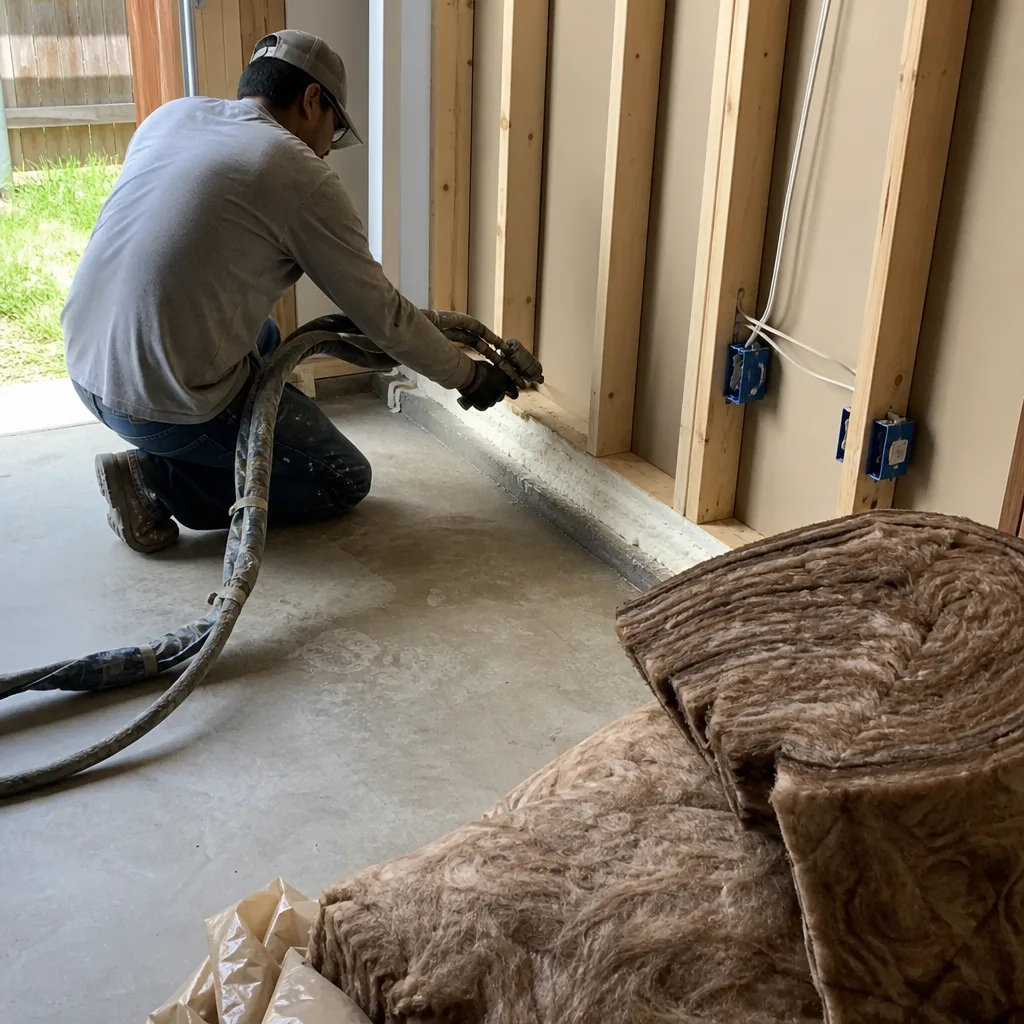
You can. That’s the short answer. The longer answer is that James Hardie products are among the most spec-documented materials in residential construction, so matching a board profile, a texture, and a color is usually straightforward once we identify what was installed. We’re an independent builder and we’re not affiliated with James Hardie, but we work with their products daily on ADUs, garage conversions, and additions across San Antonio.
Which James Hardie Models This Applies To
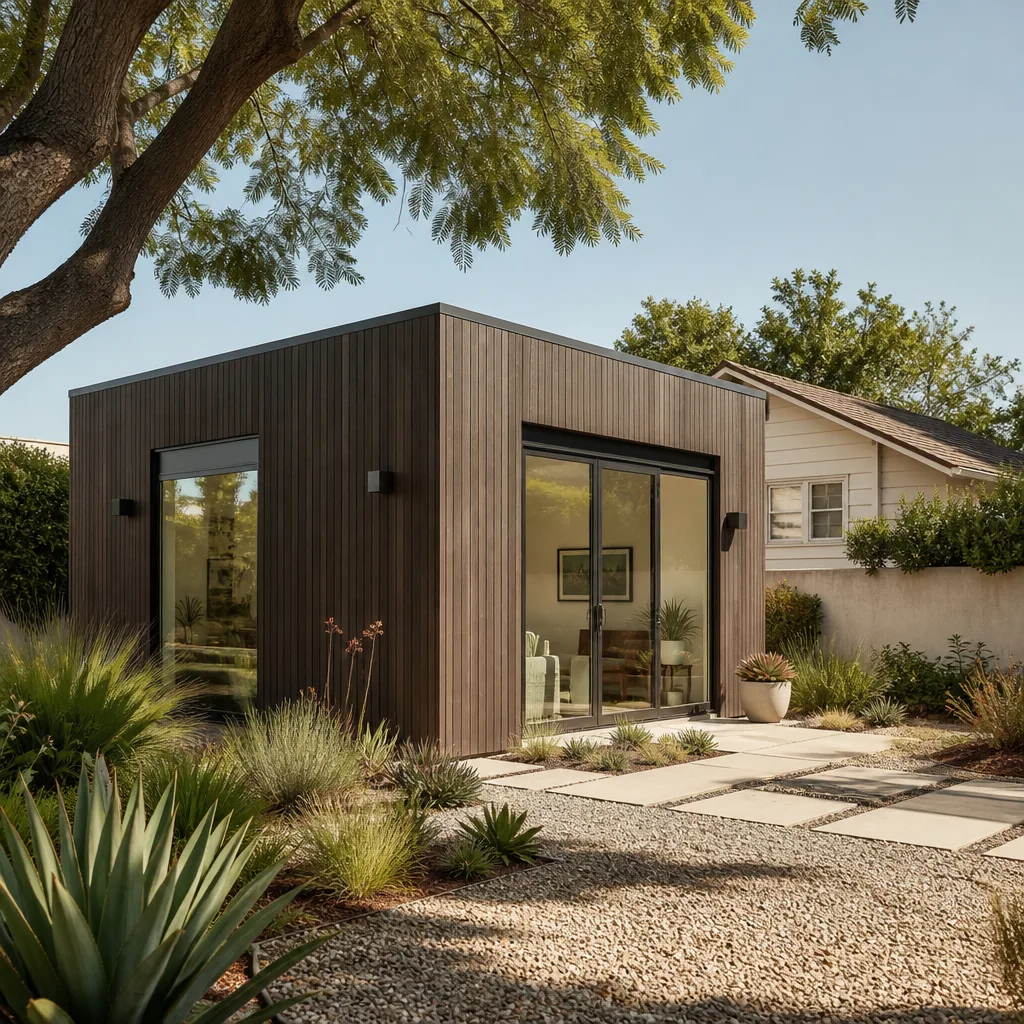
For a new detached ADU in San Antonio, the three products you’ll most often spec are HardiePlank lap siding (4-inch and 6-1/4-inch exposure options), HardiePanel vertical siding (4×8 and 4×10 sheets), and HardieTrim boards (various widths from 3-1/2 to 12 inches) for corners, window casing, and trim details. Each comes in either a smooth or a wood-grain texture, and that texture matters when matching existing boards. A 5/16-inch smooth board next to a 5/16-inch cedar-grain board will show the difference in low-angle Texas sunlight, even after paint. We’ve seen it happen.
One compatibility gotcha that surprises people: HardiePlank boards are manufactured in slightly different thicknesses depending on when they were produced. Older stock from a decade ago may be 5/16-inch while current boards are commonly 0.312-inch, and the shallow step between them is visible on a long wall. We routinely measure the existing boards with a caliper before ordering replacements. Another thing to check is the exposed nail heads at the bottom lip of each board. If you’re matching boards and the nailing pattern shows 16 inches on center, we know what was used behind it. HardiePanel is simpler to identify because the sheet dimensions are printed on the back face and the exposure side is obvious once a piece is down. For a new ADU, there’s no matching problem at all; you choose the product line and the color up front, and we order it from distributors who stock the San Antonio market consistently.
When it comes to OEM versus aftermarket, the honest answer for James Hardie is that the primary product and the trim should be OEM. The boards are developed with specific fiber-cement ratios, and the company’s proprietary ColorPlus finish is factory-baked. A quality aftermarket trim board (such as a primed PVC board) can be used in a specific spot to solve a recurring water problem, but we generally don’t substitute alternative fiber-cement boards without a reason. The price difference for the product is small enough in San Antonio that it’s rarely worth the visual or lifespan trade-off.
Signs Your James Hardie New Detached ADU Is Failing
- Hairline cracks running vertically through a board. Fiber-cement is brittle. A board that’s been nailed too close to the edge, or has been hit by a ladder, will crack and let water behind it. Once water is behind the siding, the framing starts to hold moisture.
- Chalky surface residue on the paint or ColorPlus finish. Here in San Antonio, UV exposure is aggressive. A chalky face means the finish has begun to break down and the board is shedding material. It’s common on west-facing walls after eight to ten years of full sun.
- Soft spots at the cut edges near the roofline or at the bottom of the wall. This is almost always a flashing or clearance problem. Hardie requires a minimum gap off a roof surface; when that gap is buried, the board wicks water and turns spongy at the edge.
- Rust streaks from the nails. That’s not a board failure, but it is a sign of cheap fasteners. Fiber-cement requires stainless or hot-dipped galvanized nails. If a previous contractor used uncoated steel, the nails corrode, and the boards loosen over time.
- Gaps opening at the butt joints between boards. Hardie requires a small gap at every joint, but when the gap widens because the board has shifted or the fasteners are failing, water and insects get straight in. In older San Antonio ADUs, we find this on sun-facing walls first.
Replacement Cost & What’s Included
In San Antonio, replacing Hardie siding on part of a detached ADU generally runs $12 to $18 per square foot of wall area, including tear-off of any failed boards, new building paper, new Hardie product, trim where needed, fasteners, and paint to match. A single wall repair on a small ADU might come in around $1,200 to $2,800, while a full siding replacement on a 600-square-foot ADU could be $9,000 to $15,000. The range depends on whether the substrate is okay, how many corners and windows are involved, and whether the original installer used the correct clearances. We pull the permit, and we include that cost in the written price.
What you get from us on any Hardie project, new or matched, is a written line-item price before any work starts. The price doesn’t change when the crew arrives. We also back every completed job with our 365-Day Done Right Promise. If something isn’t right within a year, we make it right. That’s in writing.
DIY or Call Us?
There are a couple of safe things you can check yourself. Look at the clearance between the bottom of the siding and any concrete or roof surface; Hardie has published specs on that for a reason. Look at the butt joints to see if they’ve opened. Look for cracking near nail heads. Those are useful diagnostic observations, and they help us quote accurately over the phone.
What you shouldn’t do is pull boards off the wall yourself. Fiber-cement is a silica-based product, and cutting it without proper dust control is a lung hazard. Our crew wears the appropriate respiratory protection and we control dust at the cut station, which is one reason homeowners with kids and pets tend not to attempt this kind of work themselves. The other reason is the weight; a 4×10 HardiePanel sheet is heavy and awkward on a ladder. Most San Antonio ADU repairs we do take one full day for a partial wall, and two to four days for a full siding replacement, depending on scope. If you’d rather hand it off, call us at (210) 981-6358 and we’ll give you a straight answer and a written quote.
FAQs
James Hardie siding commonly lasts 30 to 50 years in the San Antonio climate, but the caveat is that the paint finish will need renewal before the board itself fails. The board can last decades; the color will not. On west-facing ADU walls, expect to repaint or re-coat every 7 to 10 years. Proper installation clearances make a real difference to lifespan; boards sitting in water at the bottom fail early. If you’re in the early planning stage, call (210) 981-6358 and we’ll walk you through what the product will need over its life, not just in year one.
A small surface crack can sometimes be filled with a fiber-cement patching compound and repainted, but the repair only works if the board is otherwise sound and the crack is not at a fastener point. If the crack runs through a nail or the board is soft, the board gets replaced. We’ll tell you which one you have when we see it. Call (210) 981-6358 for an assessment and a written price.
A partial wall repair typically takes one working day. A full siding replacement on a small detached ADU in San Antonio usually runs two to four days, including tear-off, new materials, and finish paint. The timeline depends on how much trim is being reused and what the framing looks like underneath. We’ll give you a day-one schedule and stick to it.
We keep common HardiePlank profiles and HardieTrim dimensions on hand in standard colors and primed versions, and we order the rest from distributors that serve the San Antonio market regularly. Most specialty items are two to five business days out. When we quote a project, the material lead time is already factored into the schedule so you’re not surprised later.
Written by Ben Ortega, Owner, Seedling ADU San Antonio at Seedling ADU San Antonio, serving San Antonio and nearby areas.


