
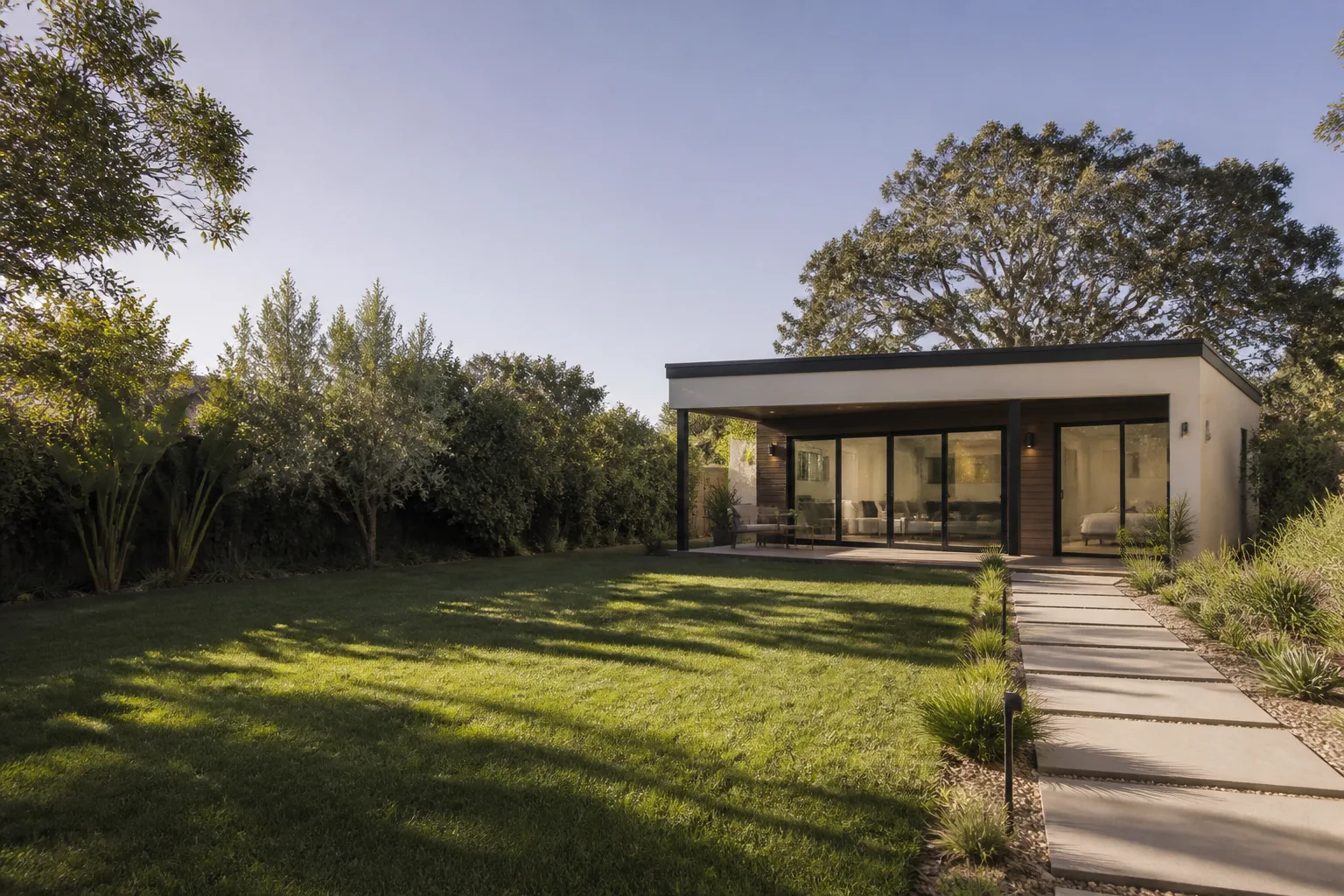
Tuff Shed Junior ADU Conversion: The San Antonio Owner’s Guide
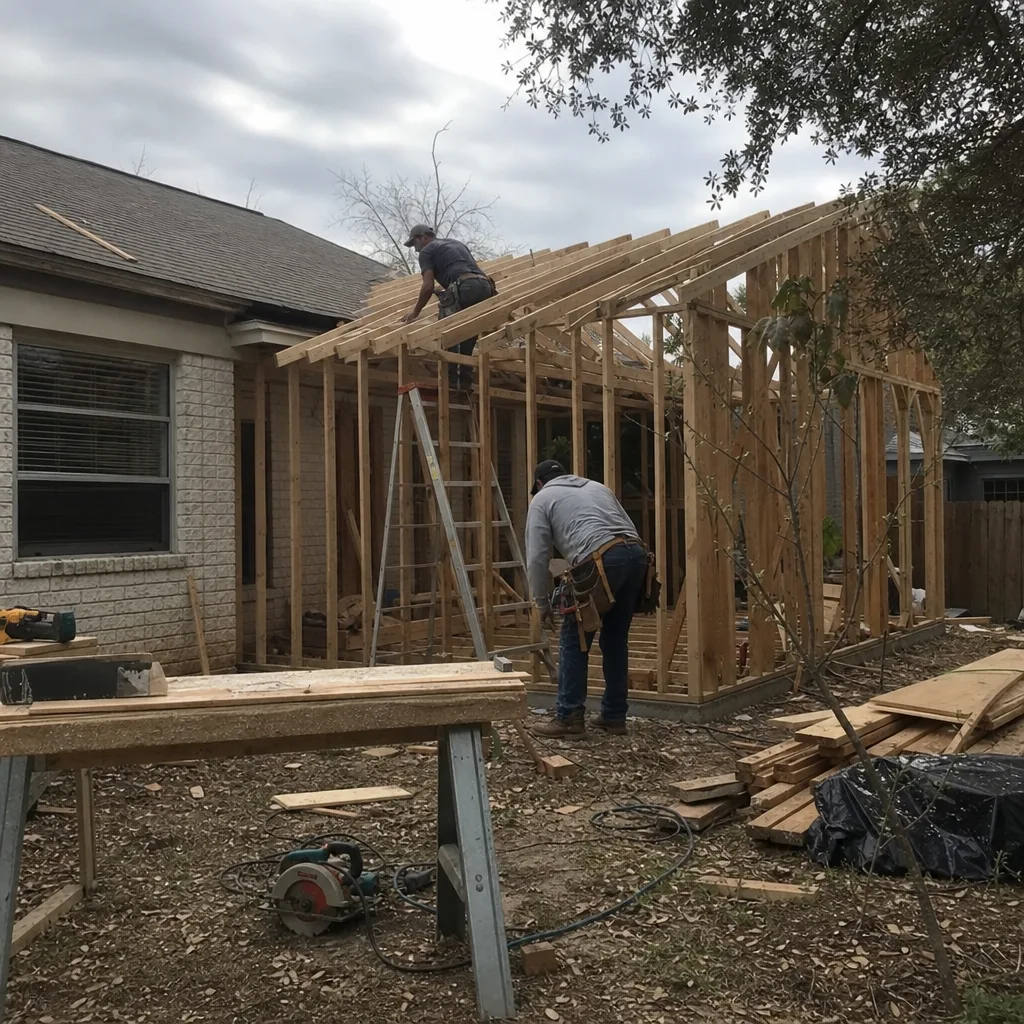
We stock and install Tuff Shed-compatible junior ADU conversion parts across San Antonio, with most complete conversions running between $22,000 and $48,000 installed, depending on the shed’s existing condition, the finish level you want, and how much electrical and plumbing work the county requires. We can typically match your Tuff Shed series to the right conversion kit within one phone call, and we keep the most common framing, insulation, and electrical components on our trucks so we’re not waiting on a distributor when your project is already underway. Most owners call us because they’ve started down the path themselves and hit a wall: the shed’s floor joists won’t pass a load calculation, the existing roof pitch won’t take a standard insulation assembly, or they discovered the electrical panel can’t handle the extra circuits. That’s normal. These sheds were built for storage, not for living, and the gap between the two is exactly what we close every week.
Which Tuff Shed Models This Applies To
We work with the full range of Tuff Shed Premier and Pro Series models, including the PremierPro Studio, Premier Ranch, and the larger Premier Tall Barn units that homeowners most often convert for a junior ADU. The compatibility question that matters most is not the model name on the brochure; it’s what’s underneath the siding. Tuff Sheds built after 2019 generally use engineered rim joists and a floor system we can reinforce for a bedroom or kitchen load. Earlier units, especially those sold before 2015, often have dimensional lumber floors that need supplemental blocking and sometimes full joist replacement before any interior framing goes up. The easiest way to identify what you have is to measure the floor joist height from the crawl space or the lower edge of the shed. If you’ve got 2×6 or larger engineered joists at 12 to 16 inches on center, you’re in good shape. If it’s 2×4 lumber at 24 inches on center, you’ll want the floor addressed before anything else. We always recommend premium OEM Tuff Shed structural components where they’re available, because the manufacturer’s tolerances for their own wall panels and trim are tighter than most aftermarket equivalents. For everything else, the insulation, the drywall, the mini-split line sets, the window trim, we use better-than-OEM materials because that’s where a comfortable, quiet living space is won or lost. Seedling ADU San Antonio is an independent service provider and not affiliated with Tuff Shed; we specify their parts because they work, but the build decisions are ours.
Signs Your Tuff Shed Junior ADU Conversion Is Failing
- The floor bounces or flexes when you walk across the center. This usually means the original floor joists were sized for light storage, not a bed, a desk, and two people. In San Antonio, seasonal soil movement adds another variable: clay soil expands and contracts with rain and drought, and a shed floor that was fine in December can show new flex by August.
- Condensation is forming on the interior walls or ceiling, especially on the south and west exposures. Tuff Shed walls are not vapor-sealed for living space. Without a proper air barrier and insulation assembly, humid San Antonio air will find the first cool surface and condense there. You’ll see it first around wall studs, which shows up as ghost lines on the drywall.
- The roof feels warm to the touch from inside on a 100-degree afternoon. A storage shed roof typically has no ventilation pathway for a conditioned space. Once you add drywall and a mini-split, heat gets trapped in a way the original design never anticipated. That heat shortens the life of everything in the room, including the mini-split itself.
- Doors and windows are sticking, or gaps have opened around their frames. Tuff Sheds are built to shed weather, and their openings are flashed for that purpose, not for an airtight, conditioned envelope. When you condition the interior, the framing moves. Sticking doors are the tell.
- You’re getting a faint musty smell that won’t go away after a rain. This is often the first sign that moisture is entering at the sill plate or around a wall-to-floor junction. Once it starts, it doesn’t stop on its own, and in San Antonio’s humid shoulder seasons, it accelerates quickly.
Replacement Cost & What’s Included
A conversion-ready Tuff Shed in good structural condition typically runs $22,000 to $34,000 to convert into a liveable junior ADU in San Antonio. If the floor needs reinforcing, the roof needs a vented insulation assembly, or you’re asking for a small bathroom and kitchenette, the range moves to $38,000 to $48,000. Every one of our estimates includes the same thing, in writing: all labor, all materials, all debris disposal, all permits pulled by us, and all inspections scheduled and passed by us. You’ll know the total price before we ask you to sign anything. No change orders show up after the crew arrives unless you ask us to add scope. Our work is covered by the 365-Day Done Right Promise: if something isn’t right a year later, we come back and make it right. And while the crew is on your property, they’ll wear shoe covers inside any part of your home they walk through, lay drop cloths at every entry, and send you a photo of the cleanup before they leave for the day. That’s the Cedarwell Care Promise, and it applies to every job we take.
DIY or Call Us?
If you’re wondering whether your Tuff Shed is structurally sound enough to convert, there are a few safe checks you can do yourself. Look under the shed at the joist size and spacing. Check for water staining along the sill plate. Walk the floor and note any soft spots. Those observations help us give you a straight answer over the phone. What you shouldn’t do is touch the roof structure, cut into a load-bearing wall, or run electrical wire yourself. High-tension work and load-bearing modifications in a San Antonio summer, where an attic space can hit 140 degrees, is not where you want to learn something new. If you’d like us to take a look, call (210) 981-6358. Ben Ortega will likely be the one who answers.
FAQs
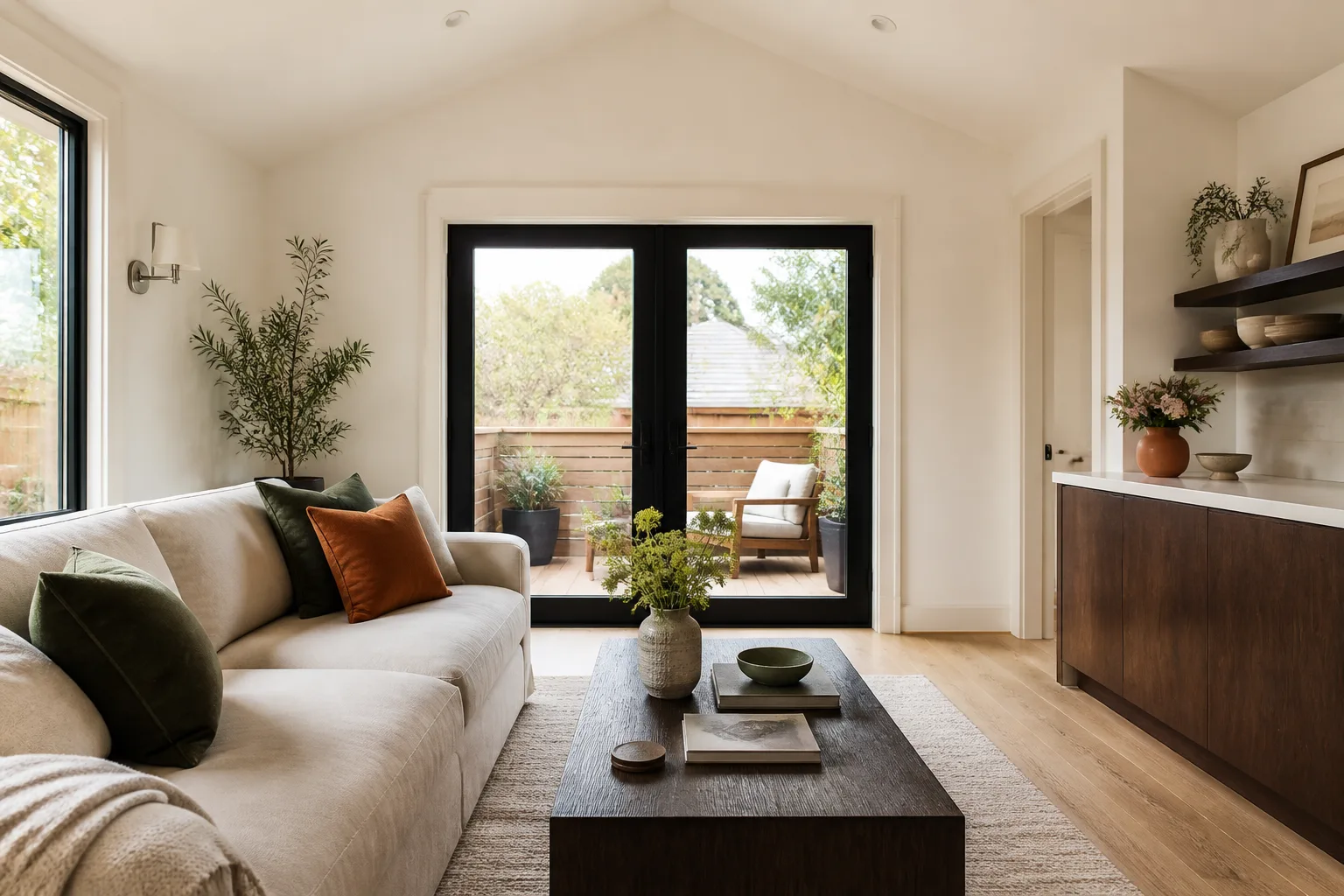
A properly converted Tuff Shed with a reinforced floor, a real insulation assembly, and conditioned air will last 30 to 40 years as living space, though you’ll replace the mini-split and repaint the exterior on a normal maintenance schedule. The conversion work itself is covered for 365 days under our Done Right Promise, and the materials carry their own manufacturer warranties. Call (210) 981-6358 if you’re weighing whether your existing shed is worth converting or replacing.
Yes, in some cases we can address a single failing component, like a bouncy floor or a condensation problem, without a full conversion. But if your end goal is a legal junior ADU with a certificate of occupancy, the repair and the conversion usually need to happen together, because the county wants the whole assembly to meet the same code at the same time. Call (210) 981-6358 and we’ll tell you honestly which path fits your shed.
A typical Tuff Shed junior ADU conversion in San Antonio takes three to five weeks from first inspection to final, depending on whether we’re adding a bathroom and what the county’s inspection schedule looks like that month. We’ll give you a start date and a finish date in writing, and we stick to them. Call (210) 981-6358 to get on the schedule.
We stock the framing hardware, floor reinforcement systems, insulation, and electrical rough-in components for Tuff Shed Premier and Pro Series units at our San Antonio yard, and we can source any series-specific trim or hardware within a few days through our distributor relationships with Tuff Shed, Abodu, Cover, and Dvele. That means we’re not waiting on a slow freight order when your project is ready to move. Call (210) 981-6358 and we’ll check stock for your specific model while you’re on the phone.
If you’ve got a Tuff Shed sitting in your San Antonio backyard and you’re trying to figure out whether it can become a real junior ADU, tell me what you need the space to do, and we’ll figure out the rest from there. We’ll give you a written price, a written timeline, and a crew that leaves your property cleaner than they found it. Call Seedling ADU San Antonio at (210) 981-6358 to schedule your free estimate.
Written by Ben Ortega, Owner, Seedling ADU San Antonio at Seedling ADU San Antonio, serving San Antonio and nearby areas.


