A free site visit, a check of what your lot allows and a written, line-item price.
Get your free estimateHow Much Does ADU Site Prep & Utilities Cost in San Antonio?
ADU site prep and utility connection in San Antonio typically runs $18,000 to $48,000 for a standard backyard accessory dwelling unit, with most homeowners landing between $24,000 and $36,000 when the lot is reasonably flat and utilities are within 100 feet of the build site. That range covers demolition and clearing, grading, foundation excavation, trenching, water and sewer connections, electrical service, and site restoration. The final number depends heavily on your lot’s slope, soil conditions, distance from the main house utilities, and whether CPS Energy requires a transformer or panel upgrade.
If you’re planning a detached ADU on a San Antonio lot, this guide breaks down exactly what you’ll pay for each line item in 2026, what drives costs up, and where you can trim without cutting corners. If you want a written price for your specific property, call (210) 981-6358 for a free estimate, no site visit fee, no pressure.
Key Takeaways
- Typical ADU site prep and utilities cost in San Antonio: $18,000 to $48,000, with $24,000 to $36,000 most common.
- Utility connections alone (water, sewer, electrical) usually run $8,000 to $22,000, depending on distance and capacity.
- Site prep (clearing, grading, excavation, foundation) typically makes up $10,000 to $26,000 of the total.
- San Antonio’s clay-heavy soil expands and contracts with moisture, which often requires soil treatment or pier foundations on the east and northeast sides of town.
- Written pricing before any work starts is standard for reputable builders. If a contractor won’t give you a line-item price, look elsewhere.
ADU Site Prep & Utilities Cost Breakdown (2026)
Here’s how the costs actually break down on a typical San Antonio ADU project. These are the numbers we see in our own written estimates across Bexar County, from Alamo Heights to Helotes to Converse.
| Line Item | Low Range | High Range | Notes |
|---|---|---|---|
| Site survey and utility locating | $450 | $1,200 | Required before any site planning; identifies existing utility paths. |
| Tree and brush clearing | $500 | $4,500 | Depends on tree size, count, and whether root grinding is needed. |
| Demolition (existing slab, shed, patio) | $1,000 | $6,000 | Dump fees in San Antonio run $50 to $120 per ton. |
| Grading and excavation | $2,500 | $9,000 | Heavier equipment for sloped lots in areas like Hollywood Park or Schertz. |
| Foundation prep and formwork | $3,000 | $8,500 | Slab-on-grade pricing varies with soil conditions; see notes below on clay. |
| Water line connection (new tap and trench) | $1,800 | $6,500 | SAWS tap fees alone run approximately $1,200 to $3,500 depending on meter size. |
| Sewer line connection or lift station | $2,000 | $9,000 | Distance from main line is the biggest variable; septic alternatives add more. |
| Electrical service run and panel upgrade | $2,500 | $8,000 | CPS Energy service upgrades or transformer requirements can push this higher. |
| Site restoration (landscaping, backfill, compaction) | $1,500 | $5,500 | Includes restoring lawn, reseeding, and addressing drainage after trenching. |
| Permits and city fees | $800 | $3,500 | City of San Antonio impact fees, permit review, and inspection costs. |
These ranges reflect what we put in writing for San Antonio homeowners, before anyone picks up a shovel. You’ll notice the total table ranges add up to more than the quick-answer range above; that’s because not every project includes every line item. A simple garage conversion in a neighborhood with existing utility access will land on the lower end. A detached 900-square-foot ADU in the Hill Country fringe of northwest San Antonio, with a 200-foot trench for a sewer connection, will land near the higher end.
What Affects ADU Site Prep & Utilities Pricing in San Antonio
Every lot in San Antonio behaves differently. These are the six factors that move your site prep number the most.
- Soil type and expansion risk. San Antonio sits on a mix of Blackland Prairie clay on the east side and shallow limestone on the north and northwest sides. Clay-heavy soil expands and contracts with moisture, so foundations often need soil treatment, piers, or deeper beams. In neighborhoods like Stone Oak and areas built over clay, expect foundation prep to run 15% to 30% higher than in areas with rock or sandy loam.
- Slope and drainage. The Texas Hill Country starts at San Antonio’s northwest edge. If your lot is in areas like Grey Forest, Shavano Park, or parts of the Dominion, grading and excavation can double. Sloped lots usually require retaining walls, engineered drainage, or stepped foundations, adding $5,000 to $15,000 to site prep alone.
- Distance from existing utility lines. Trenching costs $25 to $60 per linear foot in San Antonio, depending on soil and depth. If your ADU will sit 40 feet from the main water and sewer connections, you’ll pay far less than a homeowner who needs 150 feet of trench across the backyard. Sewer depth matters even more: San Antonio’s sanitary sewer mains average 8 to 12 feet deep, and deeper connections mean more excavation and shoring.
- Electrical service capacity. Many older San Antonio homes built in the 1960s and 1970s still carry 100-amp panels. Adding an ADU with its own kitchen and mini-split HVAC typically requires a panel upgrade to 200 amps, which runs $2,000 to $5,000 before any trenching. If CPS Energy determines your line needs a transformer upgrade, that’s a separate cost most homeowners don’t see coming.
- Existing structures in the build zone. A detached ADU in a backyard with an old concrete patio, a rotting shed, or a chain-link fence costs more before the real work starts. Concrete demolition in San Antonio runs $3 to $8 per square foot. Tree removal averages $400 to $2,500 per tree, with large oaks and mature pecans pushing toward the high end.
- Permit and impact fees. The City of San Antonio assesses development impact fees for water and sewer based on meter size. An ADU with a separate water meter pays higher SAWS fees than one that shares the main house meter. Plan review takes 3 to 6 weeks in most cases, and expedited review adds cost if you want it faster.
ADU Site Prep: What You’re Actually Paying For
When you look at a site prep line item on an estimate, it’s easy to think you’re paying a lot of money for dirt work. Here’s what that money actually does on your property.
Clearing and Demolition
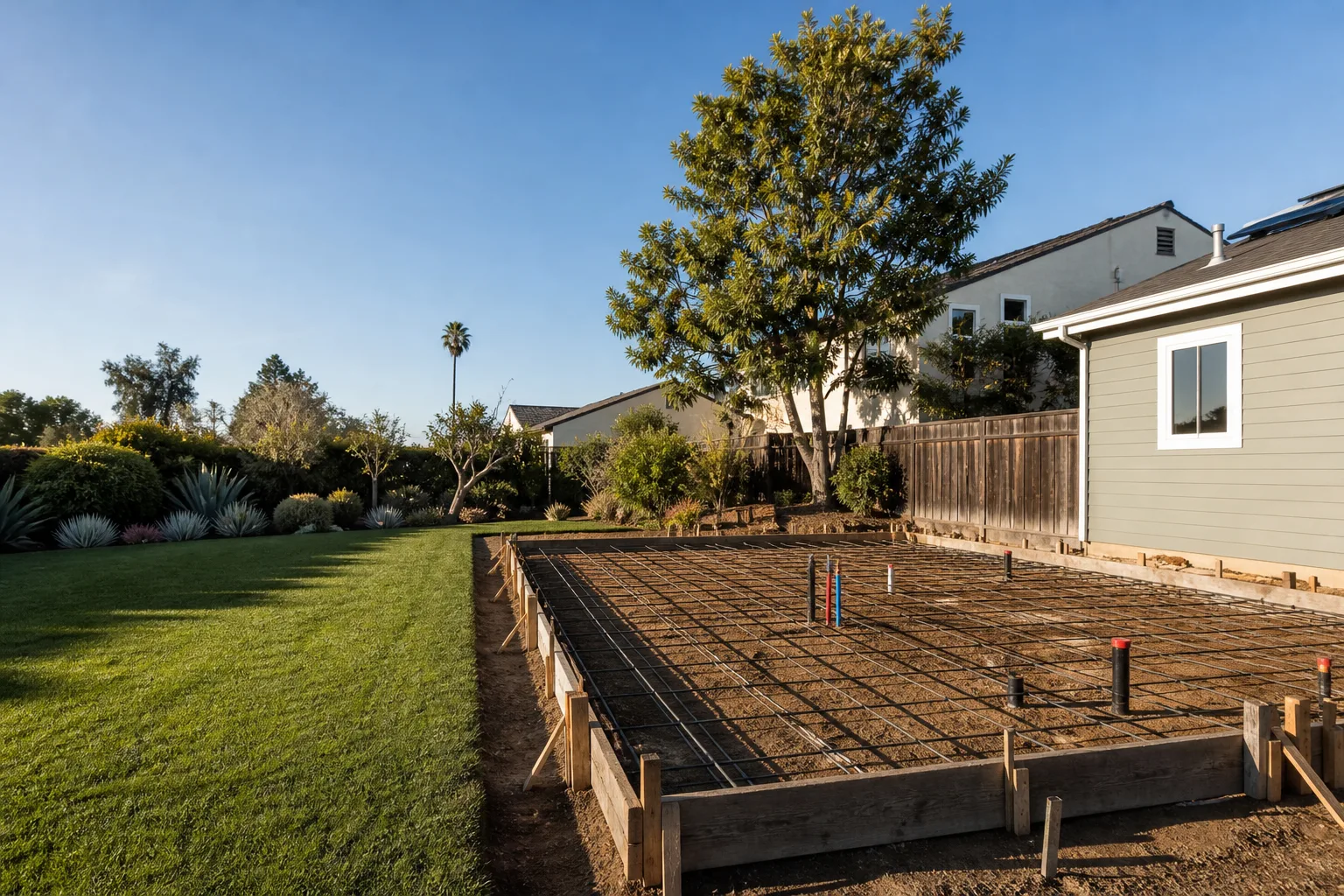
Before anyone can stake out the ADU footprint, the build area has to be cleared. That means removing grass and topsoil from the footprint area, pulling out any existing concrete, removing fences or gates in the way, and grinding stumps below grade so they don’t cause foundation settlement later. On a typical 600-square-foot ADU footprint, that’s a 20-foot by 30-foot area, plus a 4-foot buffer around the perimeter for form access.
If your San Antonio backyard has an old pecan tree that’s dying, removal costs $800 to $3,000, and the stump grinding adds another $150 to $500. If there’s an existing concrete slab from a torn-down garage, demolition runs $3 to $8 per square foot, plus dump fees. These are real labor and disposal costs, not padding.
Excavation and Grading
If your lot is flat, excavation might look like a quick scrape of topsoil and a shallow dig for formboards. On a sloping lot, it looks like an excavator running for two or three days, moving soil, and possibly hauling out spoil or bringing in fill. Compacted fill is critical: if the soil isn’t compacted to 95% or better before the slab is poured, you’ll get cracks in the foundation within two years, and those cracks become plumbing leaks and door alignment issues.
We see this most often on San Antonio’s east side, where the clay soil is unforgiving. In Kirby and Converse, you’ll regularly find that the top 18 to 24 inches of soil needs to be excavated and replaced with engineered fill or treated with lime to stabilize it. That’s a $2,000 to $5,000 line item that disappears on a cheap estimate, but the problems it prevents are real.
Foundation Forms and Prep
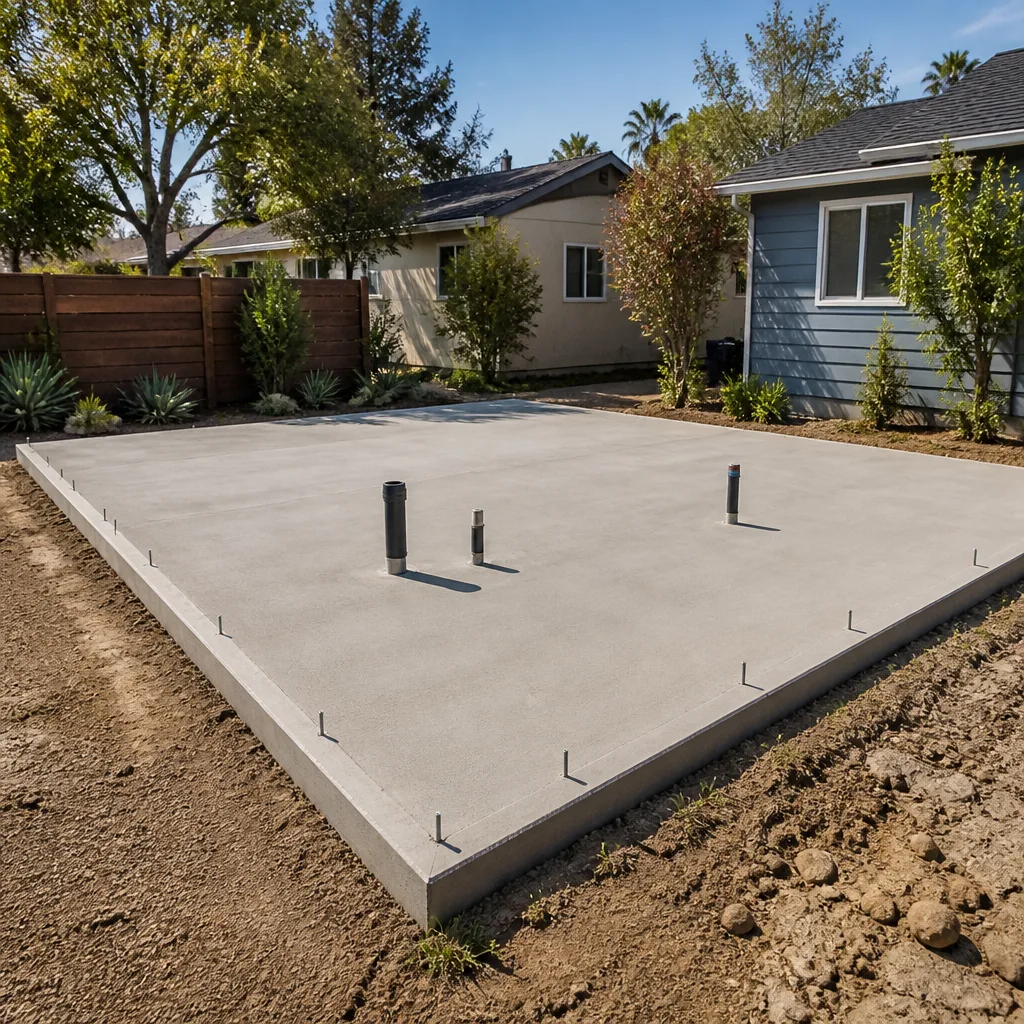
After grading comes the form setup, rebar layout, vapor barrier placement, and any embedment for plumbing sleeves. The foundation is the last thing you want to skimp on. In San Antonio, post-tension slabs are common because they handle clay soil movement better than conventional rebar slabs. Post-tension adds roughly $2 to $4 per square foot compared to standard reinforcement, but on expansive clay, it’s the difference between a 30-year slab and a 10-year one.
Utilities: The Costs Most Estimates Hide
Water Connection
SAWS, the San Antonio Water System, charges a tap fee for a new water service connection. For a standard 3/4-inch or 1-inch residential tap, expect $1,200 to $3,500 depending on whether the connection is in an easement, under a street, or requires a new meter vault. The trenching from the tap to the ADU runs $25 to $45 per linear foot through typical San Antonio soil, with rock excavation pushing that to $60 or more in northern Bexar County where limestone is close to the surface.
Some homeowners choose to connect the ADU to the main house water supply rather than installing a separate meter. That’s legal in San Antonio for most ADU configurations and saves the SAWS tap fee entirely, but it means the ADU’s water use shows up on the main house bill. Sharing the meter is often the smarter choice unless you plan to rent the ADU long-term and want separate billing.
Sewer Connection
Sewer is the line item that surprises San Antonio homeowners the most. If your ADU sits within 50 feet of the main sewer lateral and the slope allows gravity flow, connection costs $2,000 to $4,500. If the ADU is uphill from the sewer line or farther than 100 feet, you may need a grinder pump and a force main, which runs $6,000 to $12,000 installed. San Antonio’s sewer lines run deeper than many homeowners realize, and a deep connection means more shoring, more inspection, and more labor.
In rare cases, usually on large lots in far west or far north San Antonio with no sewer main nearby, a septic system might be the only option. A standard aerobic septic system for a one-bedroom ADU runs $8,000 to $14,000 installed in Bexar County, plus ongoing maintenance. Most city lots won’t need this, but if you’re on the outer edges of the county, ask early.
Electrical Service
An ADU needs its own electrical panel and a dedicated service run. CPS Energy, San Antonio’s municipal electric utility, requires permit-approved electrical plans before any connection. For a typical 100-amp ADU subpanel, the run from the main panel to the ADU costs $2,500 to $6,000 in conduit and wire, depending on distance and whether the run crosses pavement. If your main house panel is maxed at 100 amps, upgrade to 200 amps before the ADU panel is added, which runs $2,000 to $5,000. Some CPS Energy service locations require a transformer upgrade; that cost is determined by CPS and paid separately.
San Antonio-Specific ADU Regulations That Affect Cost
San Antonio updated its ADU ordinance in 2023, and those changes directly affect site prep and utility pricing. Here are the items that show up on San Antonio estimates more than anywhere else in Texas.
- Setback requirements. Detached ADUs in San Antonio must sit at least 5 feet from side and rear property lines. That doesn’t change your site prep cost much, but it does mean the build zone may be tighter than you expect, requiring smaller equipment or hand digging in some spots, which adds labor.
- Impervious cover limits. San Antonio limits impervious cover on residential lots to protect the Edwards Aquifer recharge zone. If your lot is already near the limit due to the main house, driveway, and patios, adding an ADU slab may require a variance or permeable pavement for any new paths. That can add $2,000 to $6,000 to your site work.
- Tree preservation rules. The city protects certain heritage trees above 24 inches in diameter. Removing protected trees requires a permit and sometimes mitigation planting. If you have a large oak in the ADU footprint, we often recommend shifting the footprint rather than fighting the city for removal; it’s faster and usually cheaper.
- Floodplain and drainage requirements. Parts of San Antonio near Salado Creek or Leon Creek sit in FEMA flood zones. Building in a floodplain requires the ADU floor elevation to be raised, which means more fill, taller foundations, and sometimes flood flaps. That adds $3,000 to $10,000 depending on the elevation difference.
How the Site Prep Phase Works on a Seedling Project
We follow the same sequence on every project in San Antonio, whether it’s a backyard ADU in Terrell Hills, a garage conversion in Olmos Park, or a side-yard unit in Leon Valley.
First, utility locating and marking. We call 811 and have the existing water, sewer, gas, electric, and telecom lines marked before any digging. This is free and required by law. On a Seedling project, you’ll see a written plan that shows exactly where the new utilities will run, the trench depth, and the connection point, before we break ground.
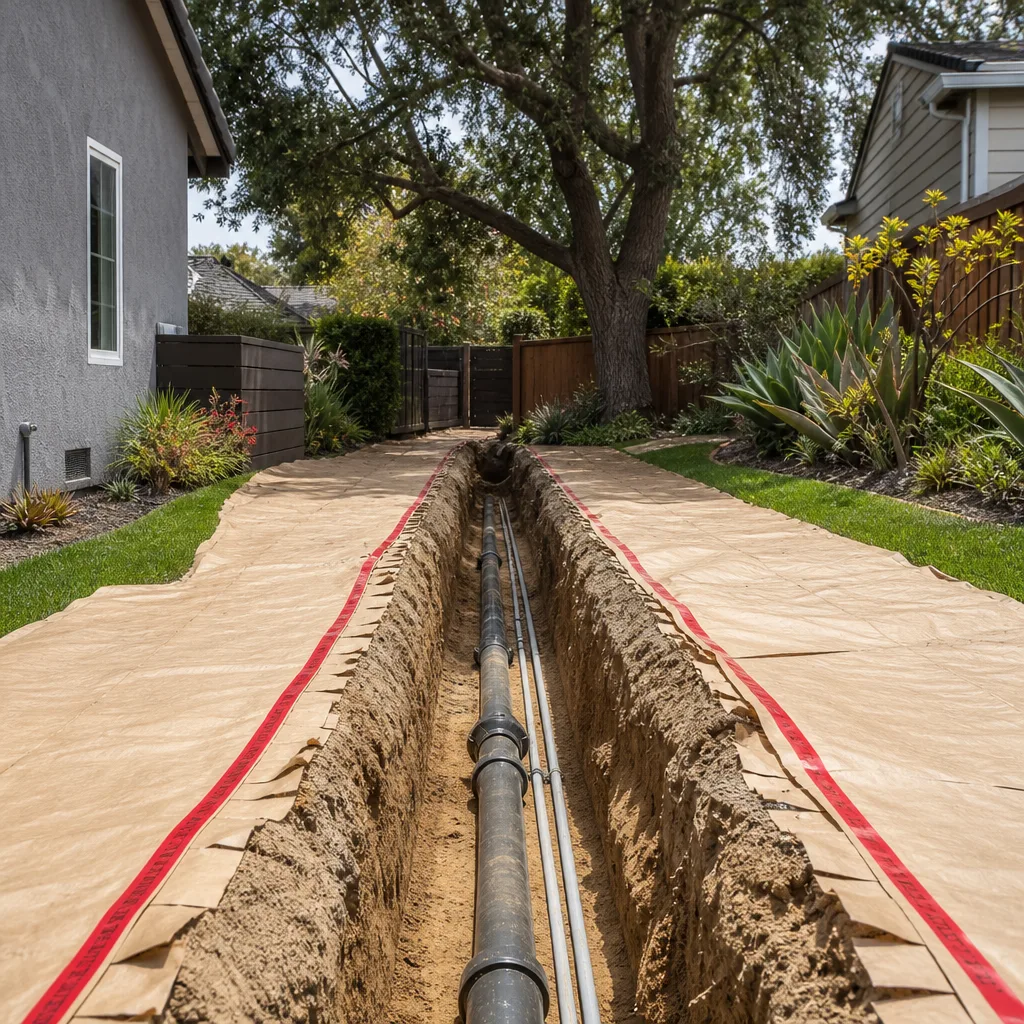
Second, site protection. This is where the Cedarwell Care Promise matters. Our crews put down plywood paths for equipment, fence off the work zone, and cover any areas between the work zone and the house with drop cloths. If we’re moving equipment through a side gate, that path gets protected. Pets and kids never come into contact with open trenches, and every trench is barricaded at the end of the day, even if we’re back the next morning.
Third, the actual work. Clearing, digging, grading, forming, and roughing in utilities. This phase typically runs 2 to 4 weeks on a detached ADU. You’ll see quiet tools used where possible near the main house, and any work that generates noise is scheduled outside naps and school hours when we can. We can’t control the equipment noise from an excavator, but we can control when it runs.
Fourth, inspection and handoff. The City of San Antonio requires inspections at several stages of site work and utility rough-in. When the site prep is done and inspected, we take a photo of the clean-up before the crew leaves, every single day. That’s not a bonus: it’s part of the job.
How to Save on ADU Site Prep & Utilities
You won’t find a legitimate way to cut your site prep bill in half, but you can avoid the waste that comes from poor planning and unnecessary scope. Here are five practical ways to keep the number down without risking your foundation or plumbing.
- Place the ADU closer to existing utility lines. Every 10 feet of saved trench is $250 to $600 back in your pocket. Before you fall in love with a specific backyard spot, have someone look at where the water and sewer lines actually run. The prettiest spot on the lot is sometimes the most expensive to connect.
- Share the water meter. Unless you’re renting the unit long-term and need separate billing, connecting the ADU to the main house water supply avoids the SAWS tap fee entirely and usually shortens the trench run.
- Check what’s actually in the build zone before you design. If you know early that you’ll need to remove a tree, a patio, or an old shed, you can adjust the footprint to work around the expensive item. Moving the ADU 15 feet is free. Removing a heritage oak is not.
- Get a full written estimate before anyone starts. Every Seedling ADU San Antonio project comes with a written price before any work is started. No line items added after crews arrive. That’s not a marketing promise; it’s how we operate. If you’re comparing builders, ask them to match it. The cheapest quote that balloons is more expensive than the honest one that doesn’t.
- Ask what’s included in site restoration. Some contractors leave the yard a mess after trenching and call it done. Restoring the site properly, reseeding, and addressing drainage costs $1,500 to $5,000, and it’s worth asking about before you sign. We include it in the written price, not as a surprise at the end.
For a written estimate on your specific San Antonio lot, call us at (210) 981-6358. Estimates are free, and you’ll have numbers in writing before you decide anything.
Why San Antonio Homeowners Choose Seedling for Site Prep and Utilities
Ben Ortega leads our San Antonio team, and he has one rule that shapes every project: the site prep phase is the foundation of the whole ADU, and if it’s done carelessly, nothing else matters. That’s why every Seedling project starts with a written price, not a rough guess, and why our crews show up in uniform, background-checked, with shoe covers and drop cloths before they walk through your gate.
We also understand that adding an ADU means living through construction on a lot you already call home. Kids nap. Dogs bark at strangers. Life keeps happening. Our job is to build the new structure without making your existing home feel like a construction site. The Cedarwell Care Promise means pet-safe products where there’s a choice, a photo of the clean-up before the crew leaves every day, and a live person on the phone 24/7 if you have a question during the build.
We work with the ADU products serious San Antonio buyers research before calling anyone: Abodu, Cover, Dvele, Mighty Buildings, Boxabl, Plant Prefab, Tuff Shed structures, and James Hardie materials. But the site prep under those units is ours, done to San Antonio specifications with the foundation and utility work priced in writing before the first trench is cut.
If you’re still in the research phase, start with our home page to see how we approach ADU construction differently, or read more about our ADU Site Prep & Utilities in San Antonio service to see what’s included.
FAQs – ADU Site Prep & Utilities Cost
How much does ADU site prep cost in San Antonio?
Site prep alone, which includes clearing, grading, excavation, and foundation prep, typically costs $10,000 to $26,000 for a standard detached ADU in San Antonio. Flat lots in areas with stable soil land near the low end; sloping lots or clay-heavy sites on the east side push toward the high end. Call (210) 981-6358 for a written price on your specific lot, free of charge.
How much does it cost to run utilities to an ADU in San Antonio?
Utility connections for water, sewer, and electrical service on a San Antonio ADU typically run $8,000 to $22,000 total. SAWS water tap fees alone are roughly $1,200 to $3,500, and electrical upgrades or transformer work from CPS Energy can add $2,000 to $8,000 depending on your existing service. Our written estimates include every utility line item so nothing appears after the contract is signed.
Is it cheaper to repair or replace site prep on an existing ADU project?
If site prep was done poorly, correcting it almost always costs more than doing it right the first time. A cracked slab from poor compaction can cost $8,000 to $15,000 to repair, and a failed sewer line from improper trenching can run $5,000 to $12,000 to dig up and replace. Getting a written price for correct site prep from the start, before any work begins, is the cheapest path in the long run.
Can you do ADU site prep and utilities yourself in San Antonio?
In San Antonio, electrical and sewer work require licensed professionals and city inspections; doing this work yourself is not permitted and is genuinely dangerous. An open trench, especially one deep enough for San Antonio sewer connections at 8 to 12 feet, is a serious safety hazard without proper shoring. This is not a weekend project. We handle all permits, inspections, and contractor coordination so you don’t have to.
How long does ADU site prep and utility work take in San Antonio?
Site prep and utility rough-in for a San Antonio ADU typically takes 2 to 4 weeks, including clearing, excavation, foundation prep, trenching, utility connections, and initial inspections. Delays from the City of San Antonio plan review or CPS Energy service scheduling can extend that timeline, which is why we submit permits early and keep you updated throughout. If you’re ready to start, call (210) 981-6358 and we’ll walk you through the timeline for your lot.
Written by Ben Ortega, Owner at Seedling ADU San Antonio, serving San Antonio and Bexar County families with written pricing, careful site preparation, and ADU construction backed by the 365-Day Done Right Promise.
Pricing reflects the San Antonio market as of 2026. Seedling ADU San Antonio offers free estimates – call (210) 981-6358.
What Our Customers Say
"Added a backyard cottage. The team protected our existing landscaping and left the yard clean every evening. Gentle, respectful, and they walked us through each stage calmly."
- Tamara Welsh"Junior ADU conversion inside the house. They were incredibly clean about it, plastic walls, floor protection, daily cleanup, all with a toddler in the home. Couldn't have asked for more care."
- Marcus Oyelaran"They converted our garage and were so mindful that we were living right there through it. Quiet hours respected, site swept, nothing left out where the kids play. Lovely work."
- Eugene Park